How to Stop Being Invisible and Master Small Business SEO


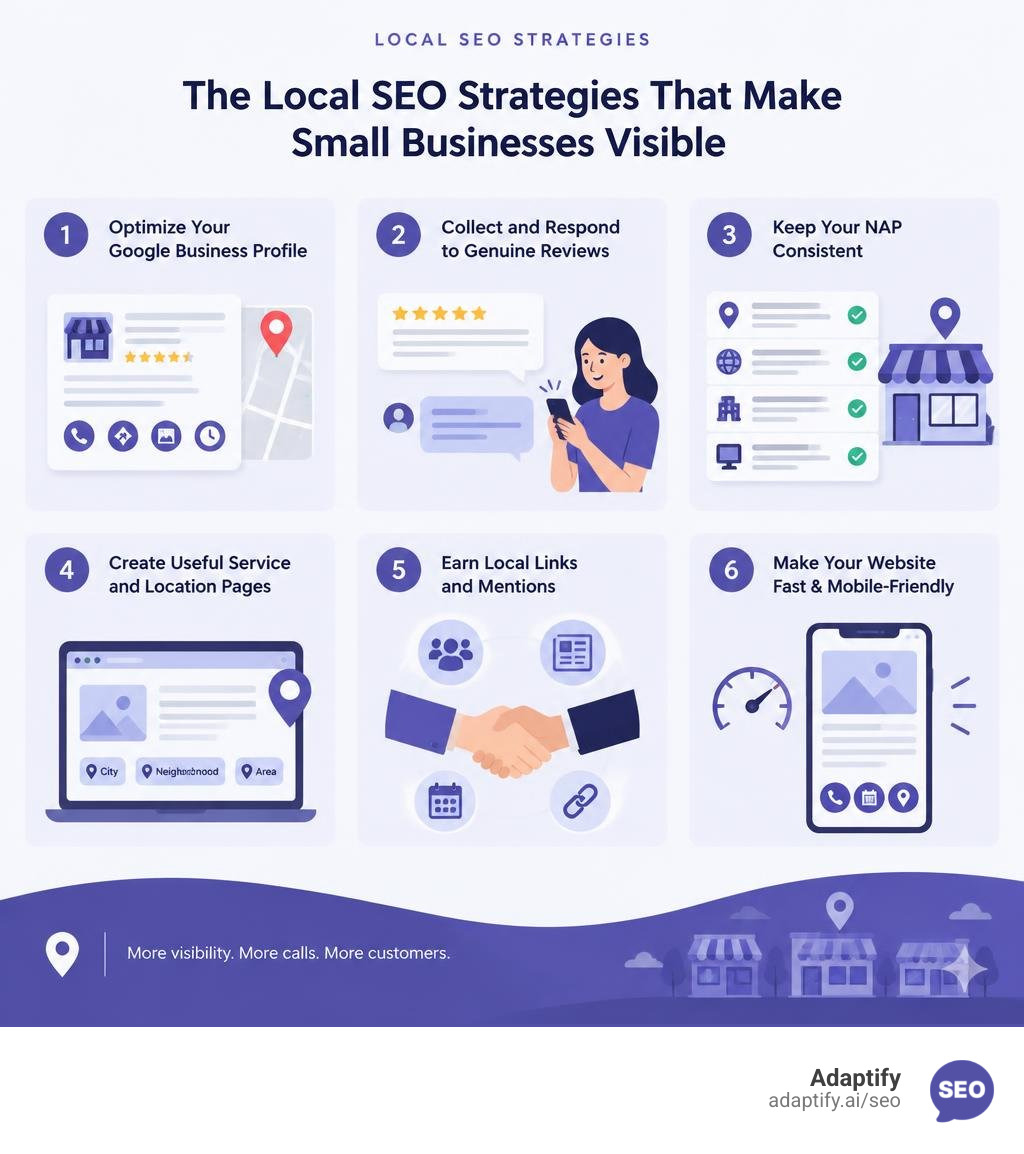
The best local SEO strategies for small businesses are to:
Local SEO helps a business appear in Google Maps, the Local Pack, local organic results, and increasingly, AI-generated answers. That matters because 46% of Google searches have local intent, and nearby searchers often have a strong reason to act now. According to Google, a complete and active Business Profile is one of the most reliable ways to improve local visibility.
For agency owners, the opportunity is clear: local visibility is not one task. It is a repeatable system of profile management, content, reputation, citations, links, and measurement. The businesses that maintain those signals consistently are far more likely to earn calls, direction requests, bookings, and qualified leads than competitors that set up a profile once and leave it untouched.
Luke Heinecke is Chief Revenue Officer at Adaptify and has more than nine years of marketing and agency operations experience, including founding and exiting a performance marketing agency. His work with SEO automation helps agencies scale the work behind what are the best local SEO strategies for small businesses without sacrificing quality or consistency.
Search engines determine local rankings by evaluating three foundational pillars: relevance, distance, and prominence. Relevance measures how well a business entity matches the user's intent. Distance calculates physical proximity between the searcher and the business. Prominence reflects how well-known and reputable the brand appears across the digital ecosystem.
Understanding these mechanics requires navigating the shift toward zero-click searches, where users find immediate answers directly within search engine results. Approximately 58.5% of searches now conclude without an external website visit. Achieving visibility in the top three map listings—known as the Local Pack—is vital because these positions secure 126% more traffic and 93% more actions than positions 4 through 10. Staying ahead requires tracking hyperlocal search trends to capture neighborhood-level demand.
| Ranking Signal | Estimated Weight | Key Focus Area | Priority Level |
|---|---|---|---|
| Google Business Profile Signals | ~32% | Primary category, completeness, attributes | Critical |
| Review Signals & Reputation | ~24% | Review velocity, volume, sentiment, replies | High |
| On-Page Relevance & Content | ~20% | Local keywords, location pages, schema | High |
| Local Link Authority | ~11% | Local backlinks, sponsorships, PR | Medium |
| Citation & NAP Consistency | ~7% | Core directories, aggregator accuracy | Medium |
| Behavioral & User Experience | ~6% | Click-to-call, direction requests, mobile speed | Ongoing |
Dominating local search requires transforming online profiles and digital properties into trusted entities that search algorithms verify across multiple touchpoints. High-intent queries—such as service searches with immediate commercial intent—demand clear proof of local operations, verified customer satisfaction, and active engagement. Implementing a comprehensive step-by-step local optimization roadmap ensures every core ranking factor receives steady attention.

A Google Business Profile (GBP) accounts for roughly 32% of Local Pack ranking weight, making it the cornerstone of local discovery. Complete profiles receive seven times more clicks than incomplete ones, yet only 44% of businesses have fully optimized their listing.

Effective profile optimization involves several critical steps:
Regularly auditing profile visibility using dedicated tracking map rankings workflows reveals geographic coverage gaps and opportunities for optimization.
Online reputation directly dictates visibility and conversion rates. Today, 97% of consumers read reviews before choosing a local company, and 68% require a minimum 4-star rating. Furthermore, 47% of consumers decline to engage with businesses carrying fewer than 20 reviews.
Review velocity—the consistent pace of acquiring new feedback—now outweighs total historical review volume. Google rewards businesses that continually earn authentic ratings. Profiles with 50 or more reviews generate 4.4 times more clicks than those with fewer than five reviews.
Multi-location organizations and service-area providers must avoid the trap of publishing duplicate landing pages. Each operating location requires distinct geo-silos built on unique content, localized team photos, specific client reviews, and individual contact details. Link separate Google Business Profiles directly to their respective location landing pages rather than the homepage. This structure ensures accurate local relevance signals for every physical branch or service territory.
A well-structured website provides search engine crawlers with clear context regarding geographic service areas. Organic search generates 53% of all web traffic and contributes 44% of revenue, highlighting the necessity of combining technical performance with localized messaging. Fast mobile loading speeds below three seconds are vital, given that 78% of local mobile queries lead to an offline purchase within 24 hours.
Effective local keyword discovery identifies terms combining core offerings with geographic modifiers, neighborhood names, and distinct service needs. Conducting high-intent local keyword research ensures content targets searchers ready to convert rather than broad informational inquiries.
Identify primary search phrases incorporating city names, service variations, and conversational phrasing like "emergency repair" or "same-day service." Incorporate these keywords naturally across metadata, page headers, image alt text, and body copy without artificial keyword density.
Dedicated location pages bridge the gap between map visibility and organic website rankings. Each location page must feature original copy exceeding 500 words, embedding localized testimonials, area-specific pricing details, parking instructions, and interactive maps.
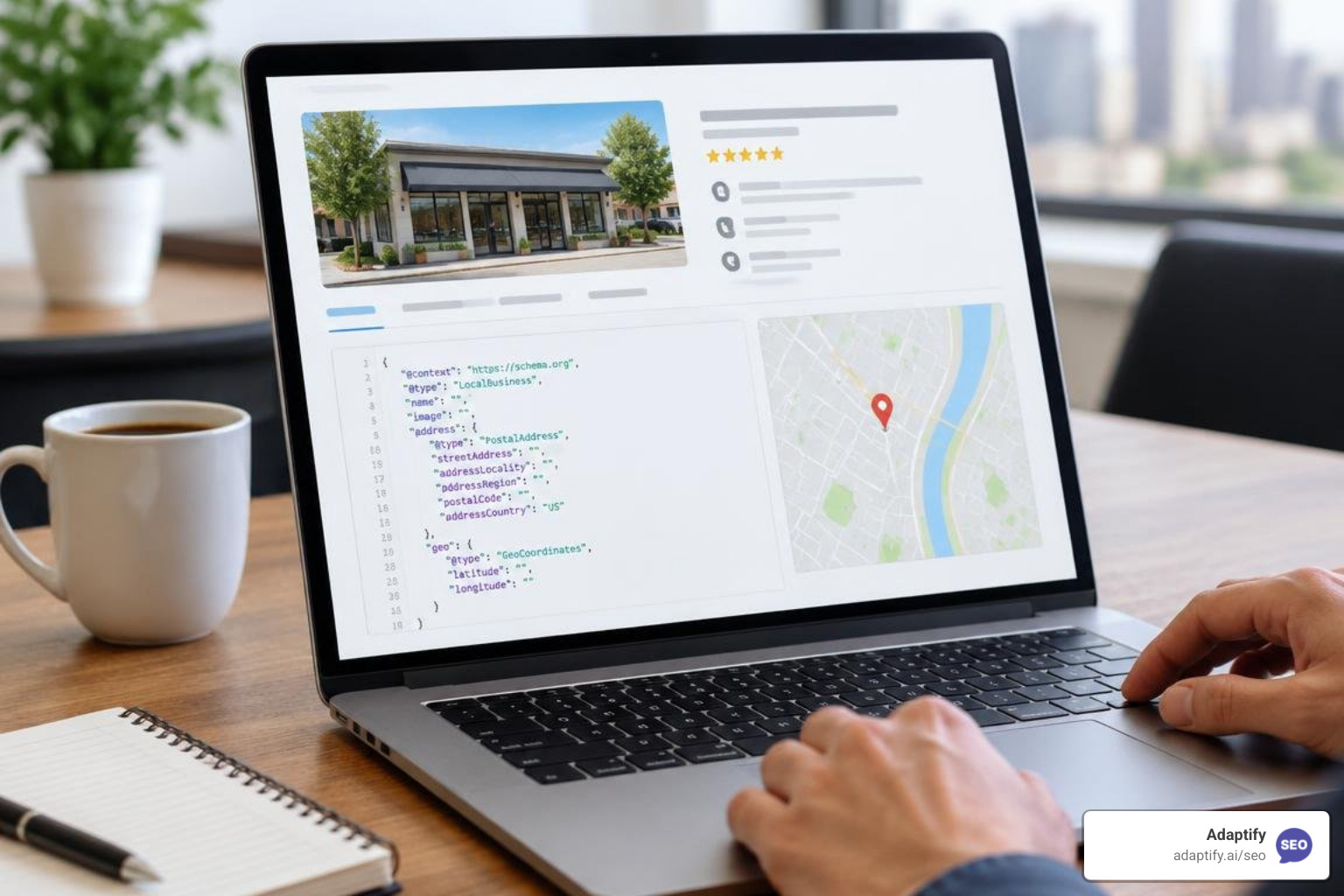
Implement structured data using JSON-LD LocalBusiness schema markup on each location page. Structured data communicates vital details directly to search engine bots:
Search engines validate a company's physical legitimacy by evaluating mentions across external platforms. Establishing off-page authority requires a blend of standardized business listings and high-quality regional backlinks.
Name, Address, and Phone number (NAP) consistency serves as an essential trust signal. Inaccurate online information causes 62% of consumers to abandon a business.
Focus citation management efforts on Tier 1 authoritative platforms: Google Business Profile, Apple Maps, Bing Places, Yelp, Facebook, and the Better Business Bureau. Supplement these with industry-specific directories and local chamber rosters. Regularly audit data aggregators to eliminate duplicate entries and resolve formatting discrepancies (such as mixing abbreviations like "St." and "Street").
Securing local backlinks strengthens geographic relevance far more effectively than generic directory submissions. Practical, budget-friendly local link building tactics include:
Local search is transforming through the rise of generative search platforms, conversational AI assistants, and AI-driven answer engines. Consumer reliance on tools like ChatGPT for local recommendations increased significantly over recent years, moving from 6% to 45% usage. Adapting to this shift requires understanding generative engine optimization to ensure automated engines cite the business entity accurately.
AI Overviews consolidate data from verified business listings, customer review sentiment, and structured on-page content to provide direct conversational answers.
To maximize inclusion in AI Overviews:
FAQPage schema markup to clarify service offerings for machine learning crawlers.Maintaining dozens of profiles, tracking volatile map rankings, syndicating localized content, and monitoring reviews requires significant manual labor. Automated platforms streamline local data synchronization, review monitoring, and technical auditing. By automating repetitive tasks, agencies and small businesses maintain the consistent signals search engines reward, securing enduring local visibility.
Measurable local SEO improvements generally appear within 60 to 90 days for standard competitive markets. Highly competitive metropolitan regions or service verticals may require 90 to 180 days of consistent effort. Foundational tasks—such as updating inaccurate GBP categories or claiming missing citations—often produce initial visibility gains within the first 30 days.
Service-area businesses can rank in the Local Pack without publicly displaying a residential or warehouse address. When creating a Google Business Profile, owners can hide the physical street address and designate specific service cities, postal codes, or geographic radiuses. Google validates the physical address privately during verification while displaying the designated service radius to public searchers.
The most widespread mistake is treating local SEO as a one-time configuration rather than an ongoing maintenance system. Abandoning a Google Business Profile after setup, failing to respond to reviews, neglecting photo updates, and allowing NAP data to drift across directories signals inactivity to search engines, leading to steady ranking declines against active competitors.
Sustained local search success relies on consistent execution across profile completeness, active reputation management, structured technical website architecture, and authoritative local partnerships. When small businesses treat local search as a unified entity strategy, they capture high-intent searchers and turn digital traffic into measurable foot traffic, bookings, and sustainable revenue. Discover how mastering strategic local authority can systematically scale local search visibility and lead generation.
Master localized SEO to rank your local business in Google Maps and drive more in-store visits.
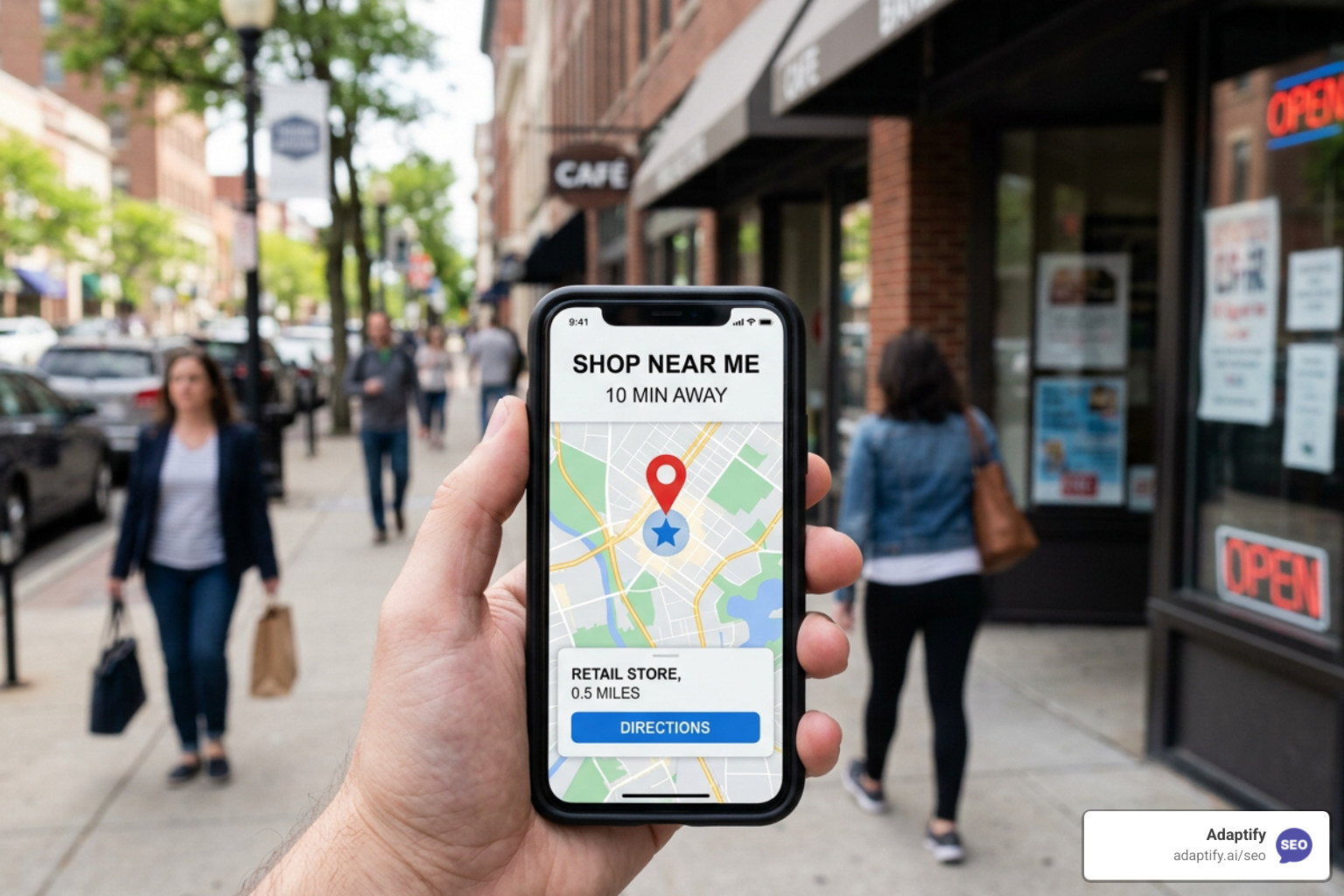
Master local retail SEO to drive foot traffic from Google with proven strategies for GBP, reviews, and AI search optimization.

Learn how to build a clean off-page SEO proposal that wins clients without raising red flags, using white-hat digital PR and transparent l...
Join 1,000+ agencies already delivering SEO and AI visibility from a single platform without increasing their headcount.Join 1,000+ agencies already delivering SEO and AI visibility from a single platform without increasing their headcount.