Stop Staring at the Cursor with These Top AI Content Generators




AI writer software is exploding right now — and if you're running an agency, you've probably felt both the excitement and the overwhelm.
Here are the top tools worth your attention in 2026:
| Tool | Best For | Starting Price |
|---|---|---|
| Jasper | Marketing teams and campaigns | ~$49/month |
| Copy.ai | Sales automation and GTM workflows | ~$36/month |
| Sudowrite | Fiction and creative writing | ~$19/month |
| Writer | Enterprise compliance and governance | ~$39/user/month |
| Rytr | Affordable everyday content | Free / $9/month |
| Writesonic | SEO-focused copywriting | ~$49/month |
Every one of these tools uses large language models to generate human-like text from a prompt. The differences come down to what they specialize in, how much control they give you, and how well they fit your workflow.
Here's the reality for most agency owners right now: your clients need more content than ever. Blog posts, landing pages, product descriptions, social copy — the list never ends. And staring at a blank document, waiting for inspiration, is not a scalable strategy.
AI writing tools promise to fix that. The numbers back it up — some teams report 80% time savings in asset production and a 50% increase in content output after adopting the right platform. That's not a small efficiency gain. That's a fundamental shift in how content gets made.
But with dozens of tools launching every few months, picking the right one is genuinely hard. Most of them sound identical on the surface. The real differences only show up when you test them against your actual use case.
I'm Hansjan Kamerling, a product designer and marketing consultant who has worked across AI platforms, fintech startups, and high-growth SaaS products — and evaluating AI writer software is something I do as part of building smarter content workflows at Adaptify AI. In this roundup, I'll cut through the noise and show you exactly which tools are worth your time.
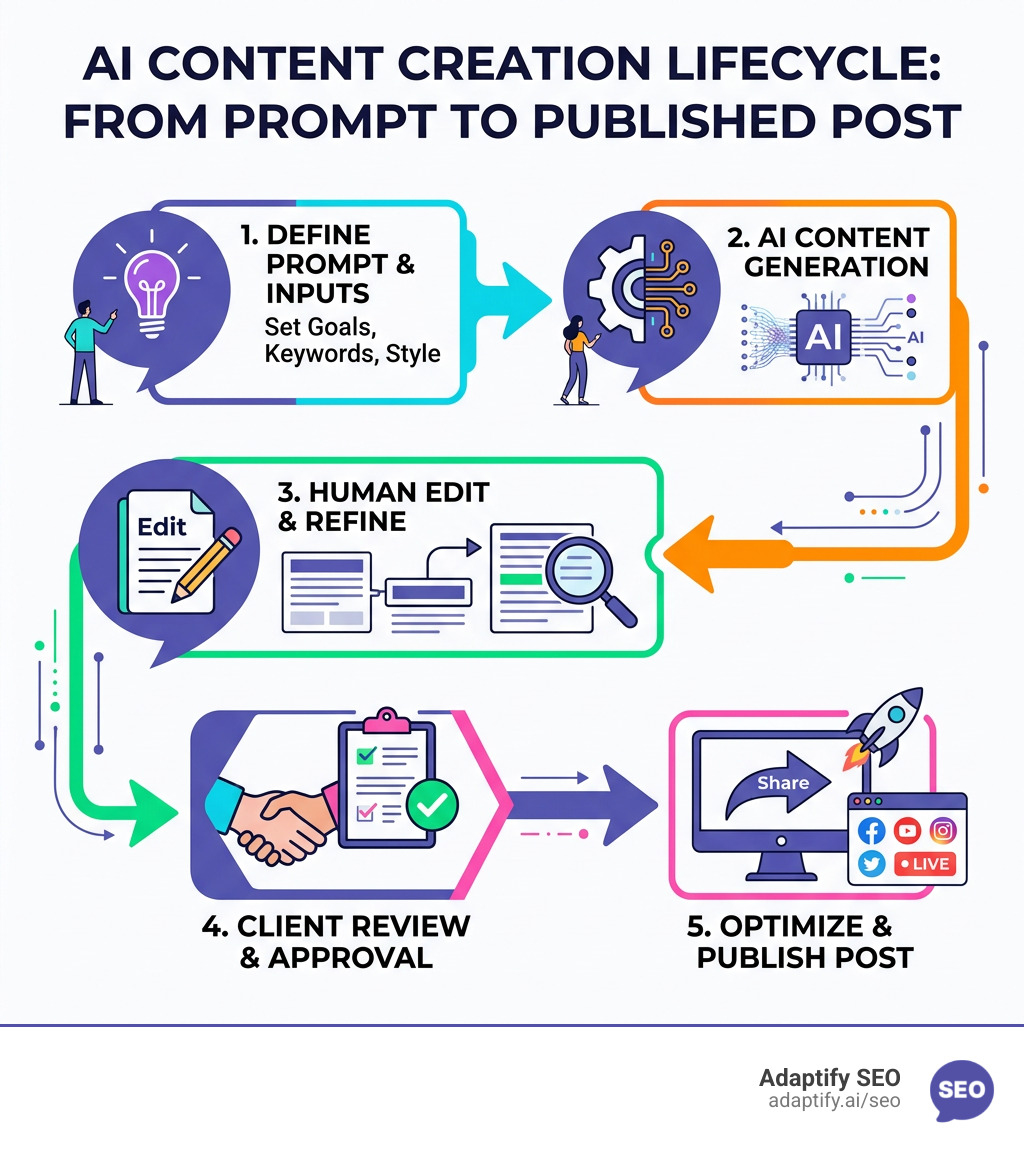
If you’ve ever used predictive text on your phone to finish a sentence, you’ve used a very primitive version of an AI writer. Modern ai writer software, however, is on a completely different level. These tools are powered by Large Language Models (LLMs) and Natural Language Processing (NLP).
Think of an LLM like GPT-4 as a student who has read almost everything ever written. These models are scraped from the open internet, consuming billions of pages of books, articles, and websites. By analyzing these massive datasets, the AI learns the patterns of human language. When you give it a prompt, it isn't "thinking" in the human sense; it is using context-aware intelligence to predict which word should logically follow the next to create human-like text.

The magic happens in how these tools handle intent. Older "article spinners" used to just swap words for synonyms, resulting in unreadable junk. Today’s software understands the difference between a professional LinkedIn post and a whimsical short story. It uses deep learning to maintain tone, structure, and factual flow, making it a powerful partner for anyone looking to scale their production.
Choosing the right tool depends entirely on what you’re trying to build. Are you a novelist needing a creative spark, or an enterprise marketing lead who needs to ensure every email is legally compliant?
| Feature | Jasper | Copy.ai | Sudowrite | Writer |
|---|---|---|---|---|
| Primary Focus | Marketing Teams | Sales/GTM | Fiction Authors | Enterprise/Corp |
| Ease of Use | High (Templates) | High (Workflows) | Medium (Deep) | High (Guided) |
| Brand Voice | Excellent | Good | N/A | Exceptional |
| Plagiarism | Built-in | Optional | N/A | Native |
Jasper has long been considered the heavyweight champion of the AI content automation platform world. With more than 100,000 users, including brands like Intel and Zoom, it’s built specifically for teams that need to stay "on-brand" at scale.
What makes Jasper stand out is Jasper IQ. You can upload your brand guidelines, product details, and audience personas, and Jasper will mirror your specific tone across every piece of content. Its "Content Pipelines" feature allows marketing teams to automate the entire lifecycle—from a brief in a project management tool like monday.com to a finished draft in Google Docs. If you need to produce 7,500 product descriptions in 24 hours (a real-world use case), Jasper is the tool that can handle that volume without losing the "human" feel.
While Jasper focuses on the "creative" side of marketing, Copy.ai has evolved into a powerful GTM AI Platform. It's adopted by over 17 million users and is a favorite for Go-To-Market (GTM) teams who need to automate repetitive sales and marketing tasks.
Copy.ai excels at multi-step workflows. For example, it can take an inbound lead, research the person’s LinkedIn profile, and draft a personalized outreach email—all in seconds. For agencies running account-based marketing (ABM) campaigns, this is a game-changer. It integrates deeply with CRMs, allowing you to handle lead nurturing and personalized communications without having a human write every single word from scratch.
Most ai writer software is built for business, which often makes it feel too "stiff" for novelists. Sudowrite is the exception. It is trained specifically for fiction, making it the ultimate creative partner for authors.
Instead of focusing on SEO keywords, Sudowrite offers features like "Describe," which helps you add sensory details to a scene, and "Expand," which helps with pacing by building out thin drafts. Its Story Bible feature keeps track of your characters and plot points so the AI doesn't forget that your protagonist has blue eyes halfway through the book. It uses a proprietary model called Muse, which understands story structure and narrative flow better than a general-purpose chatbot.
For Global 2000 enterprises, "creative freedom" can actually be a liability if it leads to legal or compliance errors. This is where Writer comes in. It is widely considered the gold standard for enterprise-grade agentic work, focusing heavily on data privacy and IT governance.
Writer doesn't just generate text; it stays at the top of legal compliance by checking every output against your company's specific rules and style guides. It uses its own family of models, the Palmyra LLM, which is transparent and auditable. Large organizations trust it because it offers "always-on" governance—ensuring that every email, RFP, and research paper meets strict corporate standards. They even offer self-paced training through their AI Academy to help teams manage the change of adopting AI.
Selecting the right ai writer software isn't about finding the "best" one overall—it's about finding the best fit for your specific strategy. I recommend using a simple decision matrix:
If you're in a highly regulated industry like finance or healthcare, you might want to request a demo for enterprise AI to see how governance features work. If you're a small agency, a tool like Rytr or Writesonic might provide the best "bang for your buck."
One of the biggest mistakes I see agencies make is treating ai writer software like a "set it and forget it" machine. If you want high-quality content that actually ranks and converts, you need a human-in-the-loop.
I follow a "30-50% editing rule." This means that while the AI might handle 80% of the grunt work (the research, the structure, the first draft), a human should spend roughly 30-50% of the total production time on:
You can explore marketing playbooks to see how top teams structure these workflows. The goal is to let the AI handle the "busywork" so your creative team can focus on the "big ideas."
The short answer is no. Google has clarified that its focus is on "helpful content" created for people, not the method used to create it. However, if you use AI to pump out low-quality, spammy content just to manipulate search rankings, you will get penalized. The key is to maintain high standards for accuracy and E-E-A-T (Experience, Expertise, Authoritativeness, and Trustworthiness).
I don't believe AI will replace writers, but writers who use AI will certainly replace those who don't. AI is an assistive tool—a "force multiplier." It can provide 60-80% time savings, allowing a single writer to do the work of three. But the strategic oversight and emotional resonance that a human provides are still essential for professional-grade work.
Free versions of tools like ChatGPT and Claude are incredibly powerful for brainstorming and outlining. However, for professional agency work, paid versions are usually necessary. Paid tiers offer higher usage limits, better models (like GPT-4o), plagiarism checks, and brand voice features that free tools simply lack.
The era of staring at a blinking cursor is officially over. Whether you're using ai writer software to scale a blog, automate a sales floor, or finally finish that novel, the tools available in 2026 are more than capable of doing the heavy lifting.
At Adaptify AI, we focus on helping agencies navigate this landscape by offering automated SEO services that streamline everything from strategy to content creation. By combining the speed of AI with strategic human oversight, you can achieve the kind of growth that was previously impossible for small teams.
If you're ready to stop guessing and start scaling, you can find more info about SEO content services on our platform. The future of content isn't just AI—it's you, powered by AI.

Stop being invisible: discover what the best local SEO strategies for small businesses are to dominate Google Maps, reviews, and AI search...
Master localized SEO to rank your local business in Google Maps and drive more in-store visits.

Master local retail SEO to drive foot traffic from Google with proven strategies for GBP, reviews, and AI search optimization.
Join 1,000+ agencies already delivering SEO and AI visibility from a single platform without increasing their headcount.Join 1,000+ agencies already delivering SEO and AI visibility from a single platform without increasing their headcount.