The Content Factory: Building a Scalable Content Creation Machine

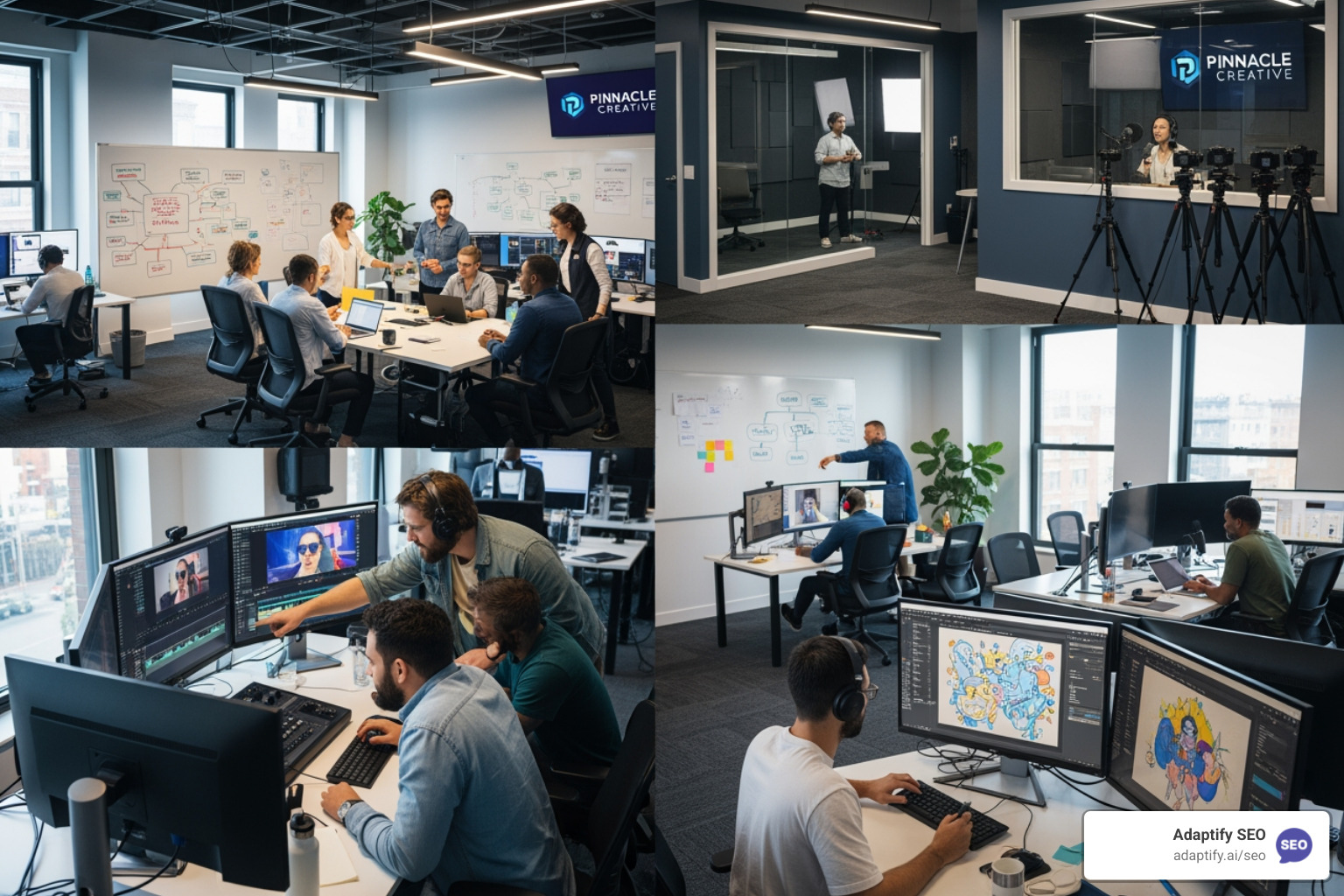

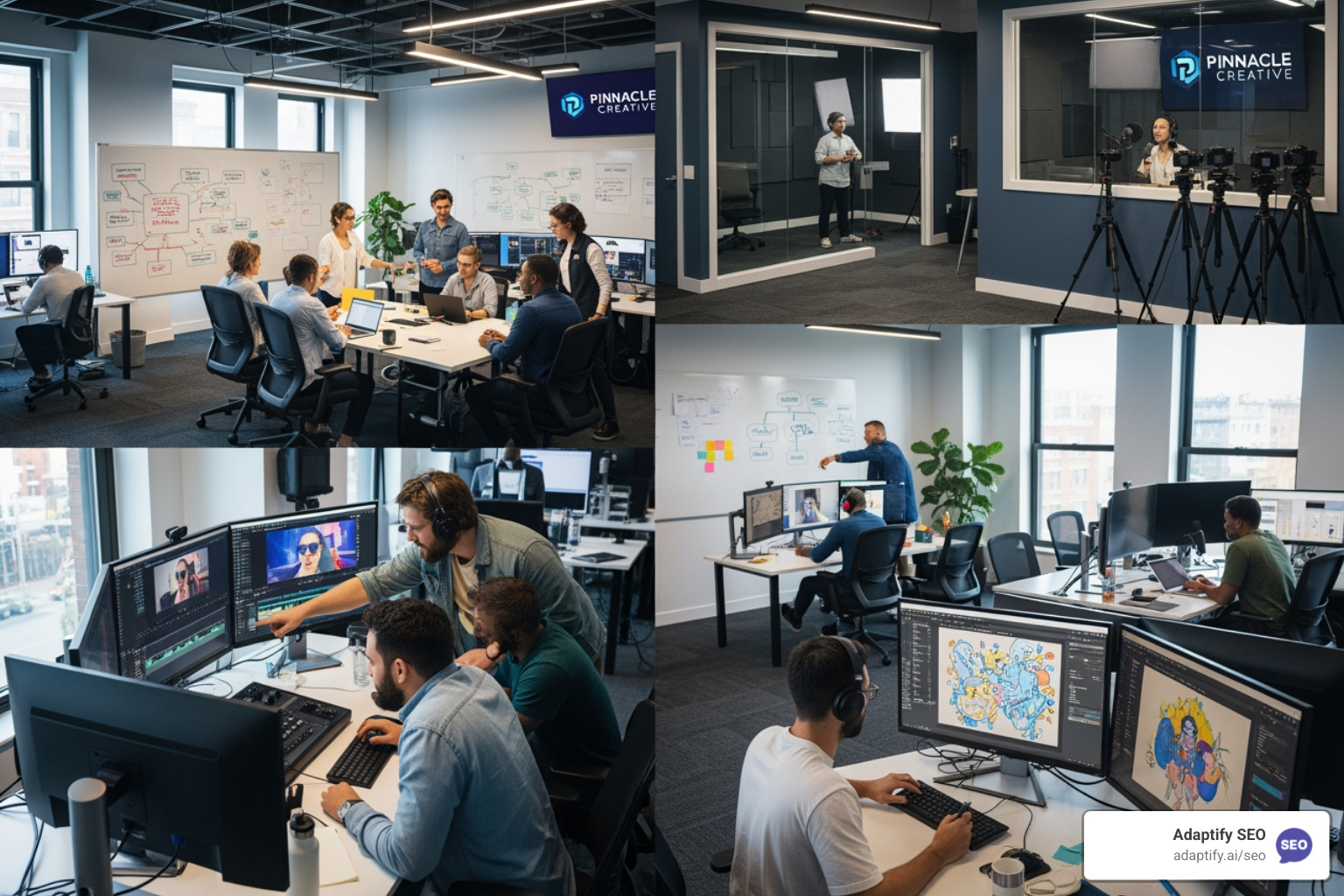
Content creation at scale is the process of producing high-quality, on-brand content consistently and efficiently across multiple channels and formats—without sacrificing quality or draining your resources.
Quick Answer: The 5 Pillars of Scalable Content Creation
The numbers tell a stark story: 91% of B2B marketers use content marketing, but the demand is relentless. Social media requires multiple posts weekly for basic visibility, and clients want a constant stream of blog posts, social content, videos, and emails.
For agencies, this is an impossible equation. Traditional content creation doesn't scale. A single writer has limits, quality suffers under pressure, brand voice gets diluted, and manual work eats up strategic hours.
This is the content conundrum: your clients need more content, but you can't hire fast enough, and quality can't take a backseat. The solution isn't just working harder or throwing more writers at the problem. It's building a content factory—a systematic, scalable approach that combines smart processes, the right technology, and human expertise.
I'm Hansjan Kamerling. I've scaled digital products to millions of users by building efficient systems. I've seen how a scalable content process transforms overwhelmed teams into efficient machines that deliver consistent results.
Picture a writer hunched over their desk, surrounded by sticky notes and an endless list of content requests. They're trying to research, write, edit, optimize, and publish everything themselves—while meeting impossible deadlines. Sound familiar?
This is the reality for many agencies relying on traditional methods. And here's the uncomfortable truth: it simply doesn't work at scale.

The first cracks appear when you increase output. The moment you push for more content, something gives—maybe it's research depth or the unique brand voice. Quality decline becomes inevitable.
When you add writers, each interprets the brand voice differently. One writer's "professional" is another's "stuffy." The result is brand voice dilution that confuses audiences.
Then there's inconsistent messaging. Your blog says one thing, and social media says another. Without clear guidelines, maintaining coherence is a full-time job. Manual errors like typos and broken links also slip through when everyone is rushing, chipping away at credibility. The core problem is a lack of oversight when creation is fragmented across isolated individuals.
Here's where traditional content creation at scale hits a wall. Hiring more writers seems like the obvious solution, but resource limitations and budget constraints make that math impossible. A skilled content writer is a significant annual expense, and multiplying that to meet demand quickly becomes unsustainable.
Even with an unlimited budget, traditional workflows create problems. Projects stall for weeks due to inefficient approval workflows, with content sitting in inboxes waiting for feedback. Siloed operations worsen everything. Content, SEO, and social teams don't coordinate, leading to duplicated efforts and missed opportunities.
The concept of content velocity—the amount of content a brand creates in a given period—highlights a critical challenge. Traditional methods can't maintain velocity without everything falling apart, forcing a choice between speed and quality when you need both.
Adding AI to the mix introduces new concerns. AI hallucinations—when AI confidently generates false information—create a significant fact-checking burden. Every AI-generated sentence needs human verification, which can negate the speed advantage.
For clients in regulated industries like healthcare or finance, the stakes are even higher. One factual error or compliance risk could lead to lawsuits or destroyed client relationships. You can't just publish and hope for the best.
This is why a human-in-the-loop oversight model is essential. AI can accelerate research and drafting, but human expertise must verify accuracy, ensure compliance, and maintain the strategic vision. The goal isn't to replace humans—it's to free them for high-value work that requires human judgment.
The bottom line? Traditional content creation wasn't designed for modern marketing's volume and complexity. To truly scale, you need a different approach built on systems and technology, not just more people.
Here's the truth: you can't scale content by just doing more of what you're already doing. You need a framework—a solid foundation that turns creative chaos into a predictable, repeatable system.

Content governance is the blueprint that keeps your content factory running smoothly. Without it, scaling just means creating more inconsistent content faster.
A centralized content strategy gives everyone a single source of truth for your brand's voice, messaging, and goals. This isn't about micromanaging; it's about giving your team the guardrails they need to produce great content independently.
Take Starbucks, for example. Their brand voice guidelines spell out exactly how different types of copy should sound. When you're producing hundreds of pieces of content monthly, this clarity is essential.
Production guidelines translate your strategy into daily workflows, defining your approval process, sign-offs, and revision handling. These operational details are the difference between smooth scaling and constant bottlenecks.
Technology is your best friend here. Approval process automation eliminates endless email chains, while content governance tools can automatically check grammar, style, and compliance issues before a human reviewer sees the content. This frees your team for strategic decisions, not hunting for commas.
The goal is simple: create a system where quality and consistency are built into every step of your process.
Your team structure can either enable scaling or strangle it. Instead of just hiring more writers, you need the right mix of roles and operational models.
Should you use centralized or distributed teams? A centralized hub offers tight control over brand voice, while distributed pods provide flexibility. A hybrid model, combining central oversight with distributed execution, is often the best approach.
As you scale, new essential roles emerge, like Content Strategists, SEO Specialists, and a Content Operations Manager to orchestrate the entire machine. This person keeps workflows moving and identifies bottlenecks.
Leveraging freelancers strategically adds capacity without the overhead of full-time hires. With clear onboarding and detailed briefs, freelancers become specialist components in your content factory.
Fostering collaboration requires intentional systems. Project management software keeps everyone aligned, shared content calendars prevent conflicts, and version control systems let multiple people contribute to documents without chaos. The goal is to remove friction so your team can focus on creating, not coordinating.
Want the fastest way to increase your content output? Stop creating everything from scratch.
Content repurposing is the secret weapon of efficient content operations. You've already invested in creating valuable content—now squeeze every drop of value from it.
Start by identifying high-performing content—the blog posts, videos, or case studies that have already proven their value. Then, multiply that value across channels.
A white paper can become a series of blog posts. Those posts can become LinkedIn articles, Twitter threads, and email newsletters. Key statistics become infographics. One piece of cornerstone content can easily spawn 10-15 derivative assets.
This isn't just about efficiency; it's strategic. Systematic adaptation means tailoring your core message to how different audiences consume content on different platforms. Your LinkedIn audience wants professional articles, while your Instagram followers prefer visual snippets.
Salesforce demonstrates this well. They transformed blog content about AI personalization into a short, engaging LinkedIn video that reached a new audience segment, maximizing reach without starting from zero.
The beauty of repurposing is that it reinforces your core messages across multiple touchpoints, building recognition and authority. You're not just creating more content—you're amplifying your best ideas.
Here's where things get exciting. A true content factory isn't just about more people or better processes—it's about leveraging technology intelligently. This is about using AI to amplify what humans do best while eliminating the tedious work that slows everything down.

In traditional content creation, a writer would spend hours on manual research, ideation, and drafting. It was exhausting and inefficient.
AI flips this model. Instead of manual research, AI can analyze thousands of data points in seconds, enabling data-driven ideation based on actual market demand, not just gut feelings. The speed and volume increase is remarkable—what used to take weeks can now happen in days.
Experts predict that 90% of online content will be generated by AI by 2025. This doesn't mean robots are taking over. It means AI isn't replacing human creativity; it's augmenting human creativity.
In my experience, AI typically gets you about 80-90% of the way there. It handles the heavy lifting: research, initial drafts, and basic optimization. This frees up your human writers to focus on nuanced storytelling, strategic positioning, and brand personality—things no AI can replicate. The result is more content, produced faster, with higher quality because your team isn't burned out. You can see how AI enhances SEO when it's implemented thoughtfully.
Your tech stack is the backbone of your content factory. Getting it right makes the difference between smooth operations and constant firefighting.
Your first essential layer is AI-powered content creation and optimization. While many tools can generate initial drafts, Adaptify SEO stands out because it doesn't just create content—it ensures that content is SEO-optimized from the very beginning. It bakes optimization into the process, eliminating the need to retrofit keywords and structure later.
The intelligence layer of your stack is your SEO platform. These tools provide the keyword research, competitor analysis, and performance tracking that inform your content strategy. Adaptify SEO integrates these capabilities seamlessly, ensuring every piece you create targets the right audience with the best chance of ranking. This integration is crucial for closing the gap where content often falls short.
Collaboration capabilities are non-negotiable when you're scaling. Your team needs shared workspaces where multiple people can contribute simultaneously without version control nightmares, keeping projects moving forward.
Workflow automation is where the magic happens. Connecting your tools eliminates countless manual handoffs. Adaptify SEO offers integrations that streamline your entire content workflow—from ideation through publishing—reducing manual effort at every stage.
Finally, project management tools provide the visibility and organization to prevent chaos. A central hub where everyone can see what's in progress, what's blocked, and what's next is essential for maintaining quality and meeting deadlines.
The real power comes when these pieces work together as an integrated system. That's what enables true content creation at scale—not just more content, but better content produced more efficiently.
Building a content factory isn't just about churning out more articles. It's about creating content that moves the needle for your business. If you're investing in content creation at scale, you need a clear way to measure success.

The metrics you track should tell a story about your content's real impact. I recommend focusing on three layers of KPIs for a complete picture.
First are operational efficiency metrics that show how well your content machine is running. Track content velocity (how much you're producing), cost per piece, and time-to-market to see if your new workflows are faster and more cost-effective.
Next, use content quality scores. While quality can feel subjective, you can measure it with readability scores and adherence to brand guidelines. Some tools can even provide automated quality checks.
Then come audience engagement metrics—the signals that people care about your content. Are page views and unique visitors increasing? Are visitors sticking around, or are they bouncing? Social shares and comments reveal if your content resonates.
Finally, measure business impact. This is where you connect content to revenue. Track leads generated, conversion rates, and customer lifetime value. A practical goal might be increasing organic blog traffic by 25% in six months—specific, measurable, and tied to growth.
Tracking these metrics in real-time allows for quick adjustments. You can view successful case studies that show the tangible results of well-measured content scaling.
Collecting data is pointless if it just sits in a spreadsheet. Use it to make your content factory smarter over time.
Build performance dashboards to connect content output to business results. Visual dashboards make it easier to spot trends and share insights. When everyone sees how content performance links to revenue, they care more about quality.
Valuable insights often come from identifying leading indicators—early signs that predict future success. For example, if articles with higher time-on-page consistently convert better, you can focus on creating more engaging content.
Attribution challenges are real, as customers rarely convert after a single touchpoint. Multi-touch attribution models help you understand how different content pieces work together throughout the customer journey.
A/B testing is your friend. Test different headlines, formats, and calls to action to see what resonates. Small changes can have big impacts.
Using Google Analytics for tracking is essential. It reveals page views, bounce rates, and user behavior. The key is to check these metrics regularly and act on what you find.
This creates a continuous improvement loop: analyze, optimize, implement, measure, and repeat. This loop transforms a basic content factory into a sophisticated content engine that gets better with every piece you publish.
This is a common question, but the truth is AI isn't coming for anyone's job. It's coming to make those jobs better.
Think of AI as an efficient assistant that handles tedious research, initial drafts, and SEO optimization. But AI can't capture subtle humor, understand emotional nuance, or know when to break rules for creative impact.
The human-in-the-loop model is essential. AI gets you 80-90% of the way there, but the final 10-20% is where human creativity and strategic judgment transform functional content into something that connects with readers. Humans provide strategic oversight, inject personality, and perform the final editing.
The future is a hybrid approach where AI handles scale and efficiency, while humans provide nuance and creativity.
This is a legitimate concern, as generic AI output can dilute a brand's voice. However, the right approach ensures consistency even at high volumes.
First, train AI on your brand voice. Advanced AI tools can learn from your client's existing content, absorbing their specific tone and style.
Next, create custom templates and comprehensive style guides. These provide guardrails that instruct the AI and keep its output on-brand.
Technology helps here: specialized governance tools can automatically check content against your guidelines, catching inconsistencies before they go live. It's like having a tireless quality control specialist on your team.
But the most critical element is human review workflows. No matter how well-trained your AI is, human editors must review the final output to catch nuances and ensure strategic alignment. This combination of AI efficiency and human expertise makes brand consistency at scale achievable.
Resist the urge to jump straight into AI tools. The most important first step is to step back, define clear objectives, and audit your current state.
Start with SMART goals (Specific, Measurable, Achievable, Relevant, Time-bound). "Increase organic blog traffic by 25% in six months" is a goal; "we need more content" is a wish. Your scaling strategy must support your core business objectives.
Next, audit your current processes. Where do projects get stuck? Which tasks are most time-consuming? This honest assessment reveals the bottlenecks that will only worsen as you scale.
Once you have a baseline, build a solid framework before ramping up production. This includes establishing your governance model, defining team roles, and setting up your tech stack.
Finally, start with a pilot program. Choose one content type or client, test your new workflows, learn from the results, and then gradually expand. This measured approach prevents costly mistakes and builds confidence in your new system.
If there's one thing I've learned from helping scale digital products and working with marketing agencies, it's this: building a content creation at scale system isn't just a nice-to-have anymore. It's the difference between agencies that thrive and those that struggle to keep up with client demands.
Throughout this guide, we've walked through the three pillars that make scalable content possible. First, there's strategy—establishing clear governance, building teams that can flex with demand, and getting smart about repurposing your best-performing content. Second, there's technology—leveraging AI not to replace your creative team, but to handle the grunt work so they can focus on what humans do best: strategic thinking, emotional storytelling, and that final polish that makes content truly shine. And third, there's measurement—tracking the metrics that actually matter and using that data to continuously refine your approach.
The content landscape is shifting rapidly. Traditional methods simply can't keep pace with the volume and velocity clients expect today. But here's the good news: the future of content isn't about choosing between quality and quantity. It's about building systems where AI handles the heavy lifting while human expertise guides the strategy and ensures every piece reflects your client's unique brand voice.
This AI-human collaboration is the key to open uping true scale. I've seen how agencies transform when they stop trying to do everything manually and start building efficient content factories that deliver consistent results.
For agencies ready to make this shift, Adaptify SEO provides the automated infrastructure you need. We handle everything from SEO strategy to content creation and PR link building, giving you back the time to focus on growing your business instead of drowning in content requests.
Ready to stop the content chaos? Build your scalable content engine with our automated SEO services and transform how your agency delivers results. Your future self—and your team—will thank you.

Stop being invisible: discover what the best local SEO strategies for small businesses are to dominate Google Maps, reviews, and AI search...

Master localized SEO to rank your local business in Google Maps and drive more in-store visits.

Master local retail SEO to drive foot traffic from Google with proven strategies for GBP, reviews, and AI search optimization.
Join 1,000+ agencies already delivering SEO and AI visibility from a single platform without increasing their headcount.Join 1,000+ agencies already delivering SEO and AI visibility from a single platform without increasing their headcount.