AI SEO Content Explained – Can Robots Really Write Better?

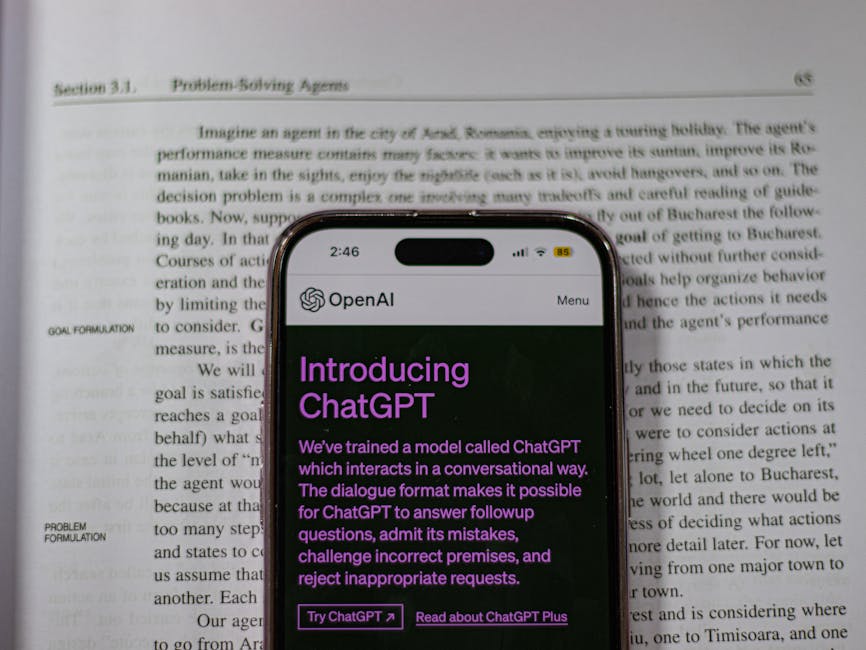


AI generated SEO content refers to text, images, or other web materials created by artificial intelligence tools specifically optimized for search engines. If you're wondering about its effectiveness and legitimacy, here's what you need to know:
| AI Generated SEO Content Quick Facts |
|---|
| ✅ Google allows AI-generated content if it's helpful and follows E-E-A-T guidelines |
| ✅ Can rank well when properly optimized and edited by humans |
| ✅ Provides significant time and cost savings (up to 10x cheaper than human writers) |
| ⚠️ Requires human oversight to avoid factual errors and ensure quality |
| ⚠️ Pure AI content often lacks human touch and emotional resonance |
In recent years, AI tools have revolutionized how we approach SEO content creation. Rather than spending hours researching keywords and drafting articles, marketers can now generate first drafts in minutes.
The reality is that AI generated SEO content isn't about replacing humans—it's about augmenting their capabilities. Think of AI as your content intern: great at research and basic drafts, but needing supervision to ensure quality and accuracy.
Google's stance has evolved from initially viewing all automated content as spam to now focusing on quality regardless of how content is created. According to their guidelines: "Our focus on the quality of content, rather than how content is produced, is a useful guide... using automation, including AI generation, is not against our guidelines."
I'm Hansjan Kamerling, product designer and marketing consultant specializing in AI generated SEO content strategies that balance automation with human expertise to deliver measurable results for agencies looking to scale their content operations.

AI generated SEO content is text created by artificial intelligence that's specifically designed to perform well in search rankings while delivering valuable information to readers.
These AI systems use sophisticated language models to write content that sounds natural, incorporates relevant keywords, and follows SEO best practices—all aimed at answering the questions people are actually typing into Google.
The technology behind this content is called generative AI—it doesn't just analyze existing text but creates brand new material. Most AI generated SEO content comes from Large Language Models (LLMs) like GPT-4, Claude, or Bard. These models have essentially "read" vast portions of the internet and can produce coherent, relevant content based on simple instructions or prompts.
Natural Language Generation (NLG) is the technical term for what's happening when an AI writes. The system recognizes patterns in language, understands context, and produces fresh text that mimics human writing styles. What transforms this into SEO content specifically is the deliberate optimization for search visibility through strategic keyword placement, well-structured headings, proper meta descriptions, and content that directly addresses specific search queries.
When we talk about AI generated SEO content, we're generally looking at two main categories:
Long-form content includes comprehensive blog posts, in-depth guides, and detailed articles typically ranging from 1,000 to 3,000+ words. They aim to rank for competitive keywords by providing thorough information on a topic. Bankrate.com drives hundreds of thousands of monthly visits through AI-assisted financial content that ranks for multiple keywords per article.
Short-form and technical content includes product descriptions, meta titles and descriptions, FAQ sections, featured snippet-optimized paragraphs, schema markup text, and social media posts.

Modern AI content generators are built on Transformer architecture, which was a genuine breakthrough in machine learning. Unlike older systems that processed text one word at a time, Transformers can look at entire passages simultaneously, understanding relationships between words regardless of where they appear in the text.
Here's what's happening when an AI writes your content:
For SEO specifically, these models have been fine-tuned to understand concepts like keyword density, heading structure, and search intent—making them surprisingly effective writing partners when properly directed with clear prompts.
So, what does Google really think about AI generated SEO content? Their position has evolved significantly.
In February 2023, Google published guidance that officially stated: "Appropriate use of AI or automation is not against our guidelines." This was a significant shift from their previous skepticism about machine-generated content.
Google now cares more about what's on your plate rather than who cooked it. They're evaluating content based on its quality and value to users, not its origin story. What matters is whether your content demonstrates the four pillars of their E-E-A-T guidelines:
According to Google's Search and AI content guidance: "Our focus on the quality of content, rather than how content is produced, is a useful guide that has helped us deliver reliable, high-quality results to users for years."
But don't start mass-producing AI articles just yet. Google remains vigilant against "scaled content abuse"—websites flooding the internet with low-quality, AI-generated pages that offer little unique value.
There are no automatic penalties simply for using AI. Google has clearly stated they don't automatically demote content just because a machine helped create it.
While Google likely has some ability to detect AI writing patterns, their algorithms are primarily focused on quality signals rather than playing detective about who wrote what.
A crucial factor in Google's evaluation is "information gain"—does your content provide unique value beyond what's already available? This is where many AI-generated pieces stumble, often just rehashing existing information without adding anything new.
The idea that Google has some magical AI content detector that automatically demotes machine-written text is simply not supported by evidence. What they can detect are patterns of low-quality, unhelpful content—which often correlates with poorly implemented AI content strategies.
The real secret to successful AI generated SEO content lies in thoughtful human oversight that ensures E-E-A-T compliance:
There are also important ethical concerns surrounding AI content creation that responsible marketers should consider, including issues of originality, potential biases in AI outputs, and the risk of spreading misinformation.
With thoughtful human oversight, you can transform raw AI output into content that genuinely meets Google's E-E-A-T guidelines while still enjoying the efficiency benefits of AI assistance.
Let's talk about the real story behind AI generated SEO content – because like any powerful tool, it comes with both impressive advantages and important limitations.
Key Benefits:
Important Drawbacks:

Despite these challenges, the success stories are compelling:
When we look at the data side-by-side, the hybrid approach clearly shines:
| Factor | AI-Only Content | Human-Only Content | Hybrid Approach |
|---|---|---|---|
| Cost/Hour | $5-15 | $50-150+ | $30-75 |
| Words/Day | 5,000-20,000+ | 500-2,000 | 2,000-10,000 |
| Fact Accuracy | Low-Medium | Medium-High | High |
| Engagement | Lower dwell time | Higher engagement | Highest potential |
| E-E-A-T Compliance | Poor without editing | Good if by qualified writer | Excellent when properly implemented |
AI shines brightest with:
Human writers remain essential for:
The smartest approach is using AI as a powerful first-draft machine and research assistant, then having skilled humans refine, personalize, and verify the content.
Here's how to create AI generated SEO content that performs well in search rankings:
Keyword Research & Analysis
Content Brief Development
Prompt Engineering
Initial Generation
Human Editing & Improvement
SEO Optimization
Technical Improvements
Publication & Monitoring

The secret to great AI generated SEO content lies in your prompts. Here's how to approach prompt engineering:
Provide clear audience context: "Write for small business owners in their 40s who are time-strapped and worried about their online visibility."
Define style specifically: "Write like you're explaining SEO to a friend over coffee – knowledgeable but not pretentious."
Be precise with keywords: "Naturally incorporate 'AI generated SEO content' in the first paragraph, at least one H2 heading, and conclusion."
Break down structure section by section rather than generating entire articles at once
Request E-E-A-T signals: "Include 3 statistics from reputable sources published in the last two years."
Specify depth: "Create a 300-word section explaining prompt engineering that includes practical examples."
Raw AI output needs humanization to go from adequate to exceptional:
Inject genuine brand voice by adjusting vocabulary and sentence patterns
Weave in real-world examples that only humans can provide
Add multimedia elements like custom images, charts showing real data, or embedded videos
Improve readability by breaking up dense paragraphs and varying sentence length
Create contextual internal links rather than generic "click here" links
Run everything through plagiarism checks and AI detection tools
Perform accessibility checks and rigorous fact-checking
At Adaptify.ai, we've developed systems that automate many of these humanization steps while still maintaining essential human review.
For effective AI generated SEO content workflows, we recommend:
Content generation: ChatGPT-4o for detailed writing, Surfer AI for SEO-specific content, Frase for deep research
Quality assurance: OpenAI Evals to benchmark quality, Grammarly for grammar and style, Originality.ai to avoid AI detection
SEO optimization: Semrush for keyword research, Clearscope for competitive analysis, Schema App for structured data
Fact-checking: Google Scholar for academic claims, Factcheck.org for general statements, industry-specific databases for niche topics
The real game-changer is documenting your entire process in a detailed Standard Operating Procedure (SOP) that includes template prompts, editorial guidelines, quality checklists, and performance tracking protocols.
To determine if your ai generated SEO content is working, track these key metrics:

Case Study: Aquarium Store Depot
By combining AI-generated drafts with expert editing from actual aquarium enthusiasts, they achieved:
Their human editors added personal experiences and technical insights about aquarium maintenance that no AI could generate on its own.
Case Study: SaaS Company Growth
A SaaS company used Surfer AI to expand their content library while maintaining quality:
Their secret was having product specialists review each piece, correcting technical inaccuracies and adding unique insights about their software solutions.
The Devaluation Reality Check
Google's helpful content update demoted approximately 45% of low-quality content across the web, much of it AI-generated. The real issues were:
To monitor your ai generated SEO content performance, create dedicated dashboards:
By systematically tracking these metrics, you'll quickly identify which AI content strategies work best for your specific audience and industry, creating a feedback loop of continuous improvement.
No, AI generated SEO content isn't inherently bad for SEO. Google evaluates content based on quality, not how it was created. However, poorly implemented AI content strategies can hurt SEO if they produce:
The key is using AI as a tool within a thoughtful content strategy, not as a replacement for quality standards.
Yes, AI-assisted content can outrank purely human-written articles under the right conditions. Several case studies demonstrate this:
The competitive advantage typically comes from the ability to produce more comprehensive content, maintain consistent publishing schedules, and implement systematic keyword optimization.
Preventing duplicate content and factual hallucinations in AI generated SEO content requires:
For avoiding duplicate content:
For preventing hallucinations:
The world of AI generated SEO content is evolving rapidly, but some clear patterns have emerged:
AI content isn't just capable of ranking well—it's already doing it. Those case studies showing 700-1300% traffic increases represent what's possible when you approach AI content strategically.
The magic happens in the collaboration between AI and humans. Think of AI as handling the heavy lifting of research and drafting, while humans contribute what machines still can't—genuine expertise, emotional connection, and original insights.
Google doesn't care if a robot helped write your content. They care if it's helpful, accurate, and valuable to readers. The algorithm targets low-quality content regardless of who (or what) created it.
From a business perspective, AI-assisted content typically costs about 10% of traditional production methods while enabling you to scale your output dramatically. For agencies juggling multiple clients, this efficiency is game-changing.
Looking ahead, we'll likely see AI tools that get even better at fact-checking themselves and generating original perspectives. The agencies that thrive won't be those that simply adopt AI fastest—they'll be the ones that develop thoughtful workflows blending technological efficiency with human creativity.
At Adaptify.ai, we've built our platform specifically for agencies looking to scale their SEO operations without sacrificing quality. We've designed our automation to improve human capabilities rather than replace them, ensuring your content remains engaging and trustworthy while dramatically reducing the time investment required.
The goal isn't to put writers out of work—it's to free them from tedious research and drafting so they can focus on adding the creative touches and expert insights that make content truly valuable.
Ready to see how the right AI approach could transform your content production? Book a Demo and find how Adaptify.ai helps agencies like yours deliver more value to clients with less manual effort.

Stop being invisible: discover what the best local SEO strategies for small businesses are to dominate Google Maps, reviews, and AI search...
Master localized SEO to rank your local business in Google Maps and drive more in-store visits.

Master local retail SEO to drive foot traffic from Google with proven strategies for GBP, reviews, and AI search optimization.
Join 1,000+ agencies already delivering SEO and AI visibility from a single platform without increasing their headcount.Join 1,000+ agencies already delivering SEO and AI visibility from a single platform without increasing their headcount.