How to stop being invisible to ChatGPT and Gemini




GEO AI visibility — or how often your brand gets mentioned and cited inside AI-generated answers — is the new battleground for organic discovery. If you're an agency owner trying to stay ahead, here's the short version:
What is GEO AI visibility?
Generative Engine Optimization (GEO) is the practice of optimizing your brand so it gets mentioned, cited, and recommended inside AI-generated answers from tools like ChatGPT, Gemini, and Perplexity — rather than just ranking on a traditional search results page.
The fastest way to improve it:
Something big shifted in the last two years. AI chatbot usage grew 81% year-over-year between 2023 and 2025. Meanwhile, traditional search engine traffic quietly declined by about 0.5%. Those two lines crossing is not a blip — it's a structural change in how people find information, compare products, and make buying decisions.
The numbers behind that shift are striking. Over 74% of Americans under 30 now use AI to search for information at least some of the time. One in three people in the US and UK uses generative AI daily — especially for shopping recommendations. And when 84% of decision-makers are already buying based on AI's first suggestion, being absent from that answer is not a visibility problem. It's a revenue problem.
Here's what makes this hard for agency owners specifically: the rules are different. You can't just apply your existing SEO playbook and expect results. A brand can rank #1 on Google and still score nearly zero when ChatGPT is asked about its category. Traditional SEO metrics — keyword rankings, impressions, click-through rates — don't capture what's happening inside AI-generated answers at all. In fact, one analysis found that GA4 reports only 0.16% of traffic coming from AI conversations, while actual server logs showed the real figure was closer to 16%. That's a 100x gap in what your analytics are telling you.
This guide walks through exactly what's changed, why it matters for your clients, and what you can do about it — without rebuilding your entire workflow from scratch.
I'm Hansjan Kamerling, a product designer and marketing consultant who has helped scale SaaS platforms from early-stage startups to millions of users, and I've been tracking the rise of GEO AI visibility closely through my work at Adaptify AI. In the sections ahead, I'll break down the mechanics of AI citations, the technical fixes that unlock crawler access, and the step-by-step playbook your agency can start using this week.
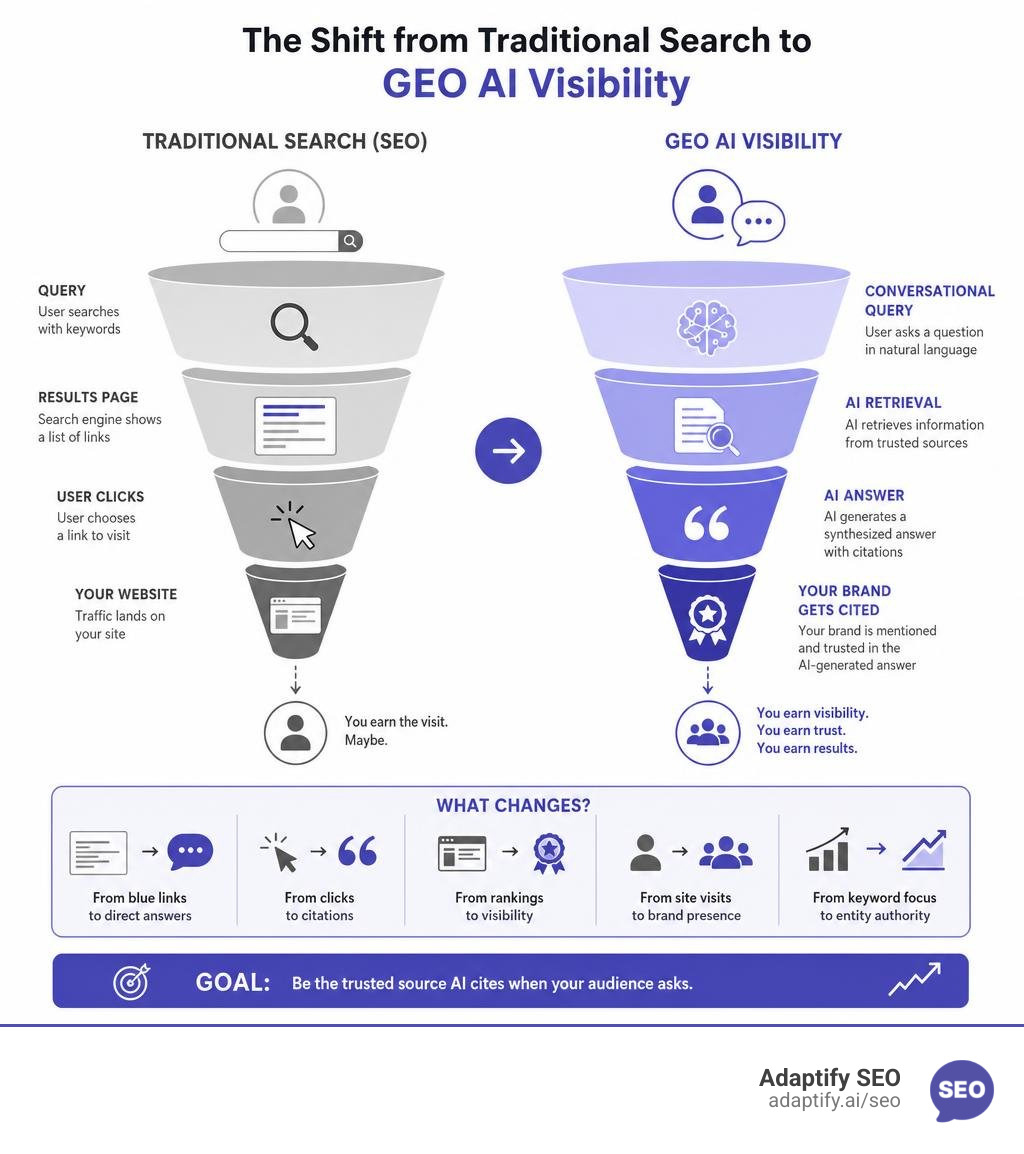
When we talk about traditional Search Engine Optimization (SEO), we are talking about a library catalog. Google acts as the librarian, handing the user a list of ten blue links and saying, "Go read these and find your answer."
Generative Engine Optimization (GEO) changes the paradigm completely. The AI doesn't give you a reading list; it reads the books for you, synthesizes the information, and presents a single, cohesive narrative. If your brand is not mentioned in that narrative, you are functionally invisible to the user.
This shift forces us to move from keyword-centric optimization to entity-centric optimization. AI systems do not match keywords; they evaluate relationships between concepts, brands, and user intent. This foundational shift was heavily analyzed in the seminal research paper Generative Engine Optimization: Research and Foundations, which formalized how brands must adapt to these new generative discovery systems.
To understand how different these two worlds are, consider this comparison:
| Feature | Traditional SEO | Generative Engine Optimization (GEO) |
|---|---|---|
| Primary Goal | Rank high in search engine results pages (SERPs) | Secure mentions, citations, and recommendations in AI answers |
| Target Output | Click-throughs to owned website | Direct citation and positive brand framing within the chat |
| Core Algorithms | PageRank, keyword matching, user signals | Retrieval-Augmented Generation (RAG), vector embeddings |
| Primary Metric | Keyword rankings, organic impressions, clicks | Mention rate, citation prominence, share of voice |
| Content Focus | Comprehensive pages targeting specific search terms | Modular, highly extractable, fact-dense content blocks |
If you want a deeper dive into how this landscape is evolving, check out The Complete Guide to Generative Engine Optimization (2026) to see how these dynamics are playing out in real-time across different industries.
AI engines like ChatGPT, Gemini, and Perplexity do not rely solely on the static data they were trained on. Doing so would make their answers outdated within days. Instead, they use a process called Retrieval-Augmented Generation (RAG).
When a user submits a prompt, the AI engine uses "query fan-out" to break that prompt down into multiple search queries. It runs those queries across the live web, pulls the top candidate pages, and selects specific passages to synthesize into the final answer.
According to research, three major factors decide which passages win the selection process:
I always tell agencies that understanding this retrieval process is the first step to getting your clients noticed. You can learn more about this foundational shift in our Beginners Guide to GEO AI SEO.
In early 2026, studies showed that Google zero-click searches hit an astonishing 68%. Users are getting their answers directly on the search page or inside their favorite chatbot without ever clicking through to a website.
If you are still measuring your agency's success solely by organic clicks, your reports are going to look increasingly bleak—even if your clients' brands are being recommended by AI engines thousands of times a day.
Furthermore, traditional ranking tracking tools cannot see what happens inside a closed LLM session. When an executive asks ChatGPT for a software recommendation, that interaction is completely invisible to standard analytics tools. We have to adapt our metrics to reflect this new reality. I highly recommend reading The AI Advantage Adapting Your SEO for the Generative Era to understand how to align your agency’s reporting with these new generative discovery behaviors.
To win the citation game, we have to understand how these engines build trust. AI engines do not trust your website blindly. In fact, they are highly skeptical of self-promotional, owned marketing copy. Instead, they cross-reference your claims against a broader web of third-party sources.
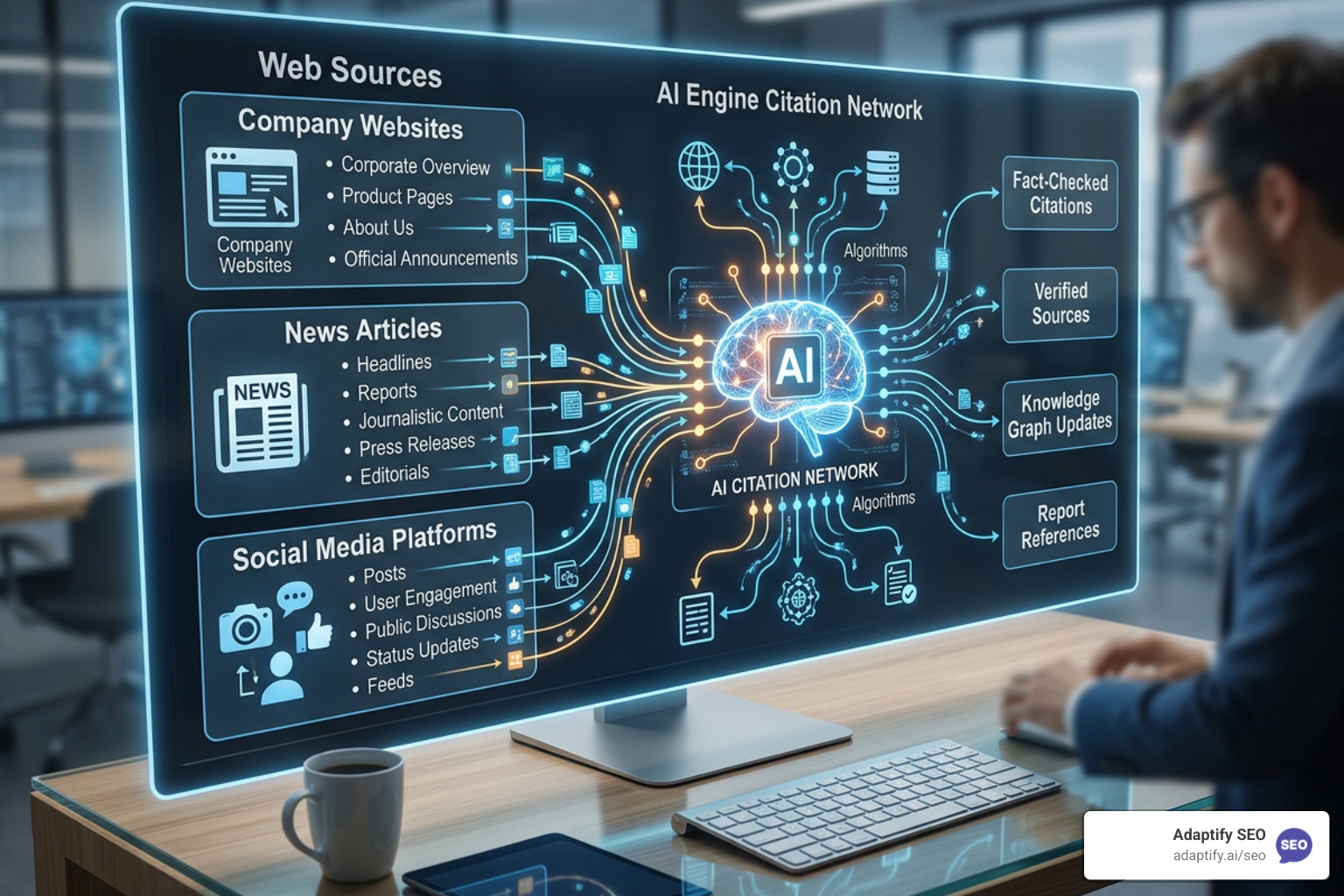
When deciding which brand to recommend, the AI looks for a consensus across the web. If your website says you are the "best CRM for startups," but no industry directories, news outlets, or Reddit threads back up that claim, the AI will ignore your site. It prioritizes balanced, objective content over biased, self-published marketing claims.
As explained in What is GEO? Why Visibility Is the Wrong Metric , simply having your brand name appear in an AI response is only half the battle. If the AI mentions your brand but does not recommend it, or worse, frames it negatively, your visibility is actually working against you.
One of the most surprising insights from recent GEO research is that 99% of AI-cited links are non-paid, and 84% of those citations come from earned media sources. Journalism, independent reviews, and corporate blogs make up more than half of what AI engines read to verify facts. Owned media—your client's actual website—accounts for only 13.7% of citations.
This means digital PR is no longer just a link-building tactic; it is a core GEO pillar. To get cited by ChatGPT, you need to get featured in the independent listicles, industry roundups, and comparison articles that the AI already trusts and retrieves.
We built Adaptify SEO to automate this exact workflow, helping agencies scale their PR link-building and earned media footprints without the massive manual overhead. You can read more about integrating these strategies in The New Frontier Integrating AI and GEO for Business Growth.
If you want to know what real people think, you don't read a press release—you go to Reddit. AI engines have figured this out too. Reddit citations in AI overviews surged by a massive 450% in just a three-month period, jumping from 1.3% to 7.15% of all citations. Today, user-generated content (UGC) makes up 21.74% of all AI citations.
Why does AI trust Reddit and Quora so much? Because they contain unfiltered, conversational human experiences. When a user asks an AI for "honest trade-offs" or "hidden costs" of a product, the AI immediately crawls active forum discussions to find real user opinions.
To maintain strong GEO AI visibility, your clients must have an active, organic presence in the community discussions where their target audience hangs out. If you want to future-proof your agency's approach to this shift, take a look at Future Proofing Your SEO Adapting to AIs Evolution by 2025.
All the content optimization in the world won't save you if the AI bots can't read your site. AI crawlers have distinct behaviors, limitations, and user-agents that differ from standard search engine crawlers like Googlebot.
To ensure your technical setup is fully aligned with AI retrieval systems, you can review the technical blueprints outlined in AI Visibility & GEO: The Definitive Guide | Akshay Nigam .
The first technical hurdle is your robots.txt file. Many developers accidentally block AI crawlers while trying to protect their site bandwidth. If you block user-agents like OAI-SearchBot, PerplexityBot, or ClaudeBot, you are actively choosing to be invisible in their respective chat experiences.
The second major issue is JavaScript. Many modern websites rely heavily on client-side rendering. However, most AI crawlers cannot execute complex JavaScript. If your main content, product tables, or pricing details require client-side execution to load, the AI crawler will see a blank page.
My rule of thumb: Always use server-side rendering (SSR) for your core informational content. If you want to dive deeper into technical optimization for agentic search, check out Beyond the Bots Mastering AI SEO for Tomorrows Search.
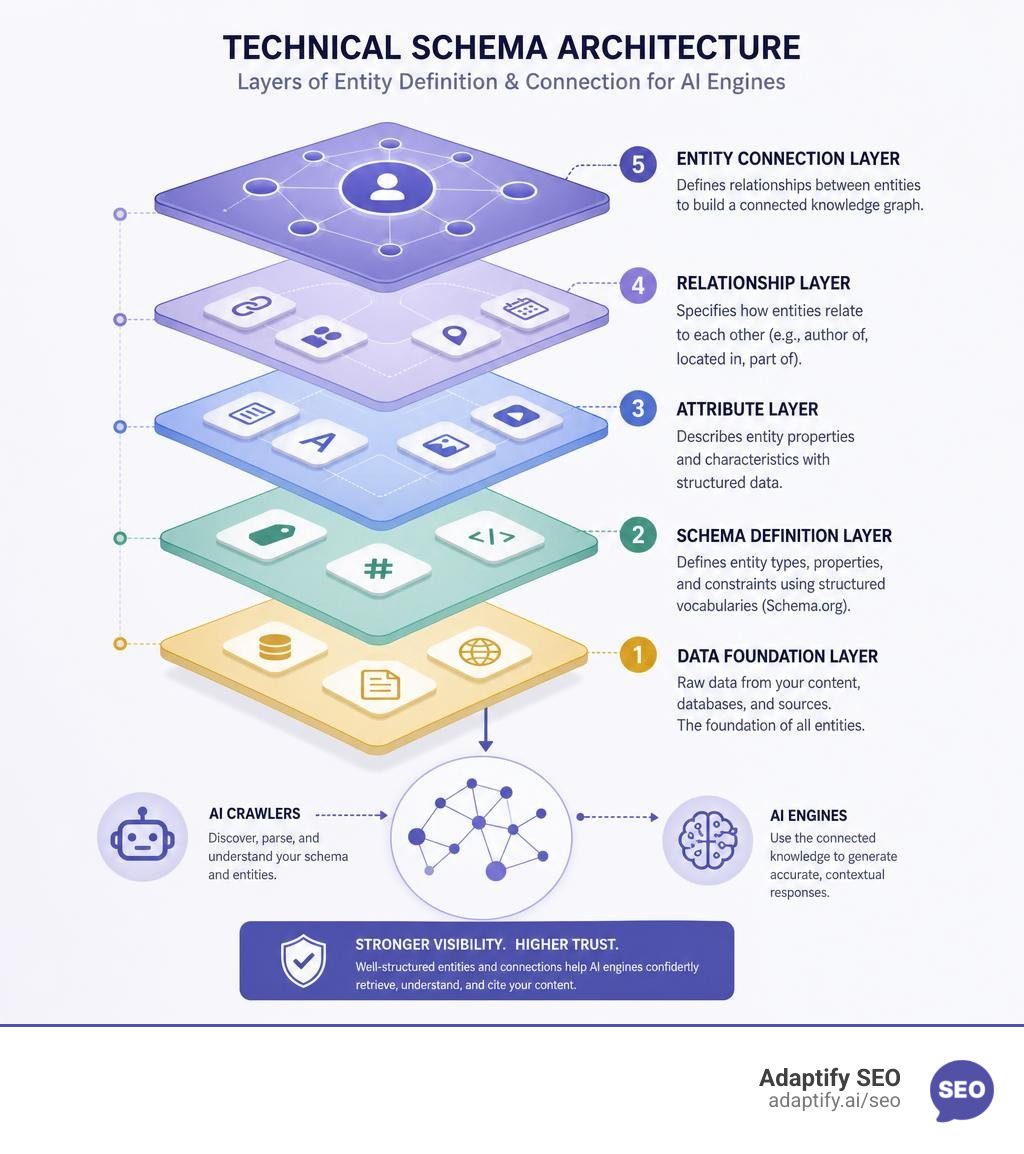
AI engines are trained to resolve entities. They want to know exactly who you are, what products you sell, and how you relate to other established entities on the web. Schema markup (JSON-LD) is the structural language that makes this possible.
To maximize your machine readability, focus on these three schema layers:
Organization or Product schema to declare your core identity and attributes.sameAs array to link your schema directly to authoritative third-party profiles like Wikipedia, Wikidata, LinkedIn, or official review directories. This prevents the AI from confusing your brand with a competitor of a similar name.Person schema to build E-E-A-T (Experience, Expertise, Authoritativeness, Trustworthiness).Implementing these schemas ensures that your local and brand entities are completely clear to AI parsers. For a practical guide on doing this, check out Local SEO is Dead Long Live GEO Boosting Local Visibility in AI.
Now that we understand the mechanics, let's look at how to put this into action. I have developed a straightforward, repeatable playbook that any agency can use to boost their clients' GEO AI visibility.
You cannot optimize for keywords anymore; you have to optimize for prompts. Begin by building a "prompt portfolio" of 20 to 100 queries that your target buyers are actually typing into ChatGPT or Perplexity. These should cover:
Run these prompts across the major AI engines and map who is getting cited. If your competitors are getting mentioned in an article on a site like TechRadar or a popular Reddit thread, but you are not, you have found a citation gap. Your immediate goal is to get your brand featured on those exact pages that the AI already trusts.
For a step-by-step framework on how to benchmark this performance, read Stop Guessing and Start Benchmarking Your AI Search Performance.
When you write new content or optimize existing pages, you must structure it for easy machine extraction. AI engines rarely cite an entire page; they extract specific, self-contained passages.
To make your content highly citable:
You cannot manage what you do not measure. But as we've established, traditional SEO metrics won't help you here. We need a modern measurement framework that looks at actual AI outputs.
For a comprehensive look at how the industry is shifting away from simple vanity metrics, read How to Measure GEO: Why AI Visibility Alone Is the Next AVE. - AMEC | International Association for the Measurement and Evaluation of Communication .
When tracking your GEO progress, focus on these three core metrics:
To understand how to calculate and track these metrics over time, you can refer to What is a GEO Score? How to Measure Your AI Search Visibility | LumenGEO .
While you can spot-check your GEO performance manually by typing a few prompts into ChatGPT, doing this at scale for dozens of clients is a losing game. AI outputs are highly volatile—between 40% and 60% of cited sources change from month to month. To get reliable data, you need automated, daily sampling across multiple platforms and geographies.
Fortunately, professional intelligence platforms like GeoNeo - AI Visibility Intelligence have emerged to help agencies scan, track, and optimize their AI presence automatically.
If you want to understand why relying on manual tracking is holding your agency back, check out our guide on Professional Tools for GEO Why Manual Tracking is a Losing Game.
Because retrieval-based AI engines (like Perplexity and Google AI Overviews) crawl the live web constantly, they can pick up new citations and content optimizations within days or weeks. However, updates to static training models (like core ChatGPT updates) move much slower and can take several months to reflect your optimizations.
No. GEO and traditional SEO are highly complementary. AI engines use traditional search results as their retrieval pool. If your site has terrible foundational SEO and cannot be indexed by Google, it will never be retrieved by an AI engine for RAG. You need both.
Absolutely. In fact, GEO levels the playing field. Smaller brands can easily outcompete massive enterprise competitors by owning a highly specific niche, structuring their content perfectly for AI extraction, and securing high-quality, unlinked brand mentions on trusted community forums like Reddit.
The transition from traditional blue-link search to AI-synthesized answers is the most significant shift in digital marketing since the birth of Google. If your agency is still relying solely on old-school SEO tactics, your clients risk becoming completely invisible to the millions of buyers who now start their journeys inside ChatGPT and Gemini.
At Adaptify SEO, we built our platform specifically to help agencies navigate this shift. By automating the heavy lifting of SEO strategy, structured content creation, and PR link-building, we empower your team to scale client visibility across both search engines and AI discovery systems with minimal manual effort.
Don't let your clients get left behind in the generative era. Explore our automated solutions at Adaptify SEO and check out our flexible agency pricing at Adaptify SEO Pricing to start building your clients' AI visibility today.

Stop being invisible: discover what the best local SEO strategies for small businesses are to dominate Google Maps, reviews, and AI search...
Master localized SEO to rank your local business in Google Maps and drive more in-store visits.
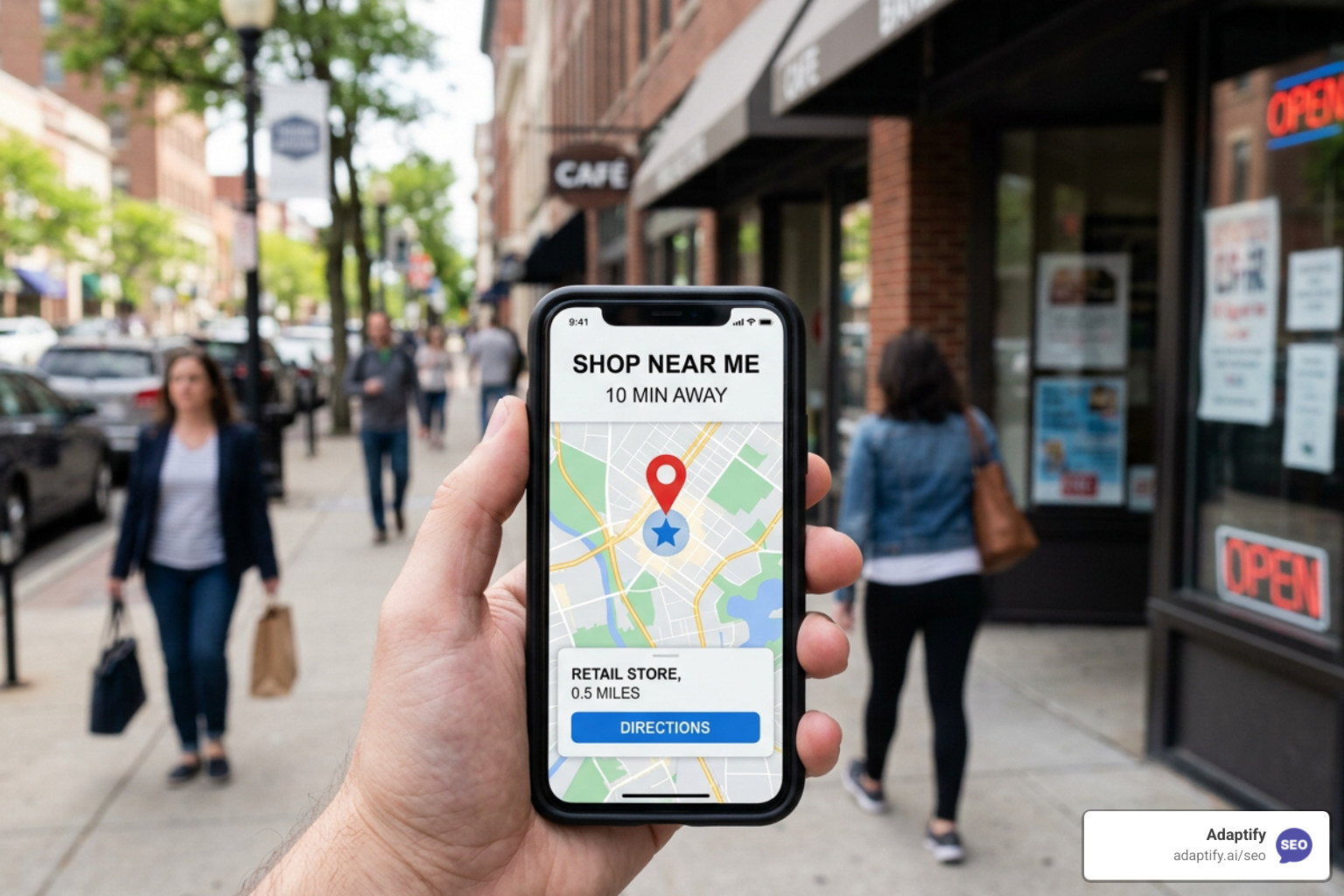
Master local retail SEO to drive foot traffic from Google with proven strategies for GBP, reviews, and AI search optimization.
Join 1,000+ agencies already delivering SEO and AI visibility from a single platform without increasing their headcount.Join 1,000+ agencies already delivering SEO and AI visibility from a single platform without increasing their headcount.