SEO Copywriting Tool Guide: Writing, Optimization, and AI Content Helpers



The right seo copywriting tool can be the difference between content that sits unread on page five and content that drives real organic traffic to your site. If you're trying to compare your options quickly, here's a snapshot of the most popular tools and what they're best known for:
| Tool | Best For | Starting Price |
|---|---|---|
| Surfer SEO | On-page optimization & content scoring | $89/month |
| Jasper | AI-powered long-form content | $39/month |
| Copy.ai | Automated marketing & sales copy | $49/month |
| Clearscope | SEO content optimization | $189/month |
| MarketMuse | Personalized content difficulty metrics | $99/month |
| Frase | AI-driven content briefs | $12/month |
| Wordtune | Rewriting & editing on a budget | Free / $9.99/month |
| WriteSonic | Budget-friendly AI writing | Free / $15/month |
Every one of these tools takes a slightly different approach. Some focus on real-time SERP analysis. Others lead with AI writing, brand voice matching, or workflow integrations. Picking the wrong one for your team means paying for features you'll never use — or missing the ones you actually need.
Content creation has gotten faster and more complex at the same time. AI tools can now generate a draft in seconds. But ranking on Google still requires getting the details right: keyword placement, search intent, readability, and on-page structure. That's where a good SEO copywriting tool earns its keep.
For agency owners especially, the pressure is real. You're managing multiple clients, juggling content calendars, and trying to maintain quality while scaling output. The tools in this guide were evaluated with exactly that challenge in mind.
I'm Hansjan Kamerling, a product designer and marketing consultant who has worked across SaaS platforms and AI startups — including a 40,000-user data analytics platform with custom-trained AI models — and I've spent years evaluating how seo copywriting tools fit into real production workflows. In the sections below, I'll break down what each tool actually does well, where it falls short, and which one makes the most sense for your situation.
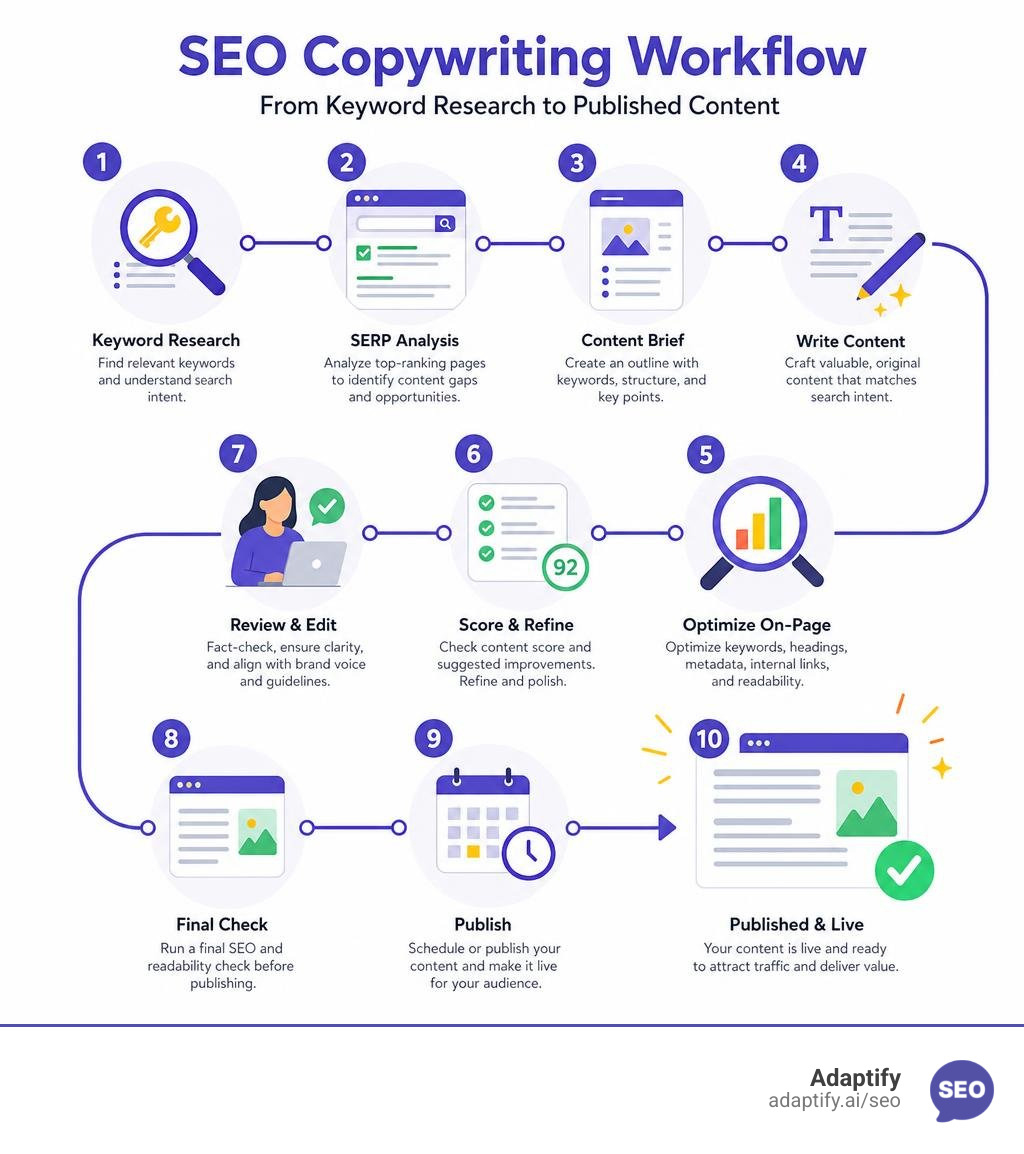
When I evaluate an seo copywriting tool, I look past the flashy marketing landing pages and focus on the day-to-day utility. A flashy interface won't help you rank if the underlying data is stale. If you want to streamline your production without sacrificing quality, there are several core features you should prioritize.
First, robust keyword optimization is non-negotiable. The tool must do more than just count how many times you've used a target phrase. It needs to analyze the search engine results pages (SERPs) to identify secondary, semantic, and NLP (Natural Language Processing) terms that Google expects to see in a comprehensive piece of content.
Second, a dynamic content scoring system gives writers a clear target. As you type, the score should update in real-time, showing how your draft compares to the top-ranking competitors.
Third, look for deep workflow integration. If your writers have to constantly copy and paste text between Google Docs, WordPress, and a third-party optimization app, your process will slow to a crawl. The best platforms offer browser extensions or direct integrations that bring the optimization data directly into your favorite editor.
Finally, readability metrics and on-page SEO checklists ensure your content is actually digestible. It doesn't matter how well-optimized your text is if it reads like a dry academic paper. A good tool will flag overly complex sentences, passive voice, and structural issues before you hit publish.
AI-powered writing has evolved rapidly. Rather than just spinning old text, modern engines use advanced language models to understand the context behind a search query. Tools like Jasper, Copy.ai, and Surfer SEO have shifted the focus from simple keyword matching to satisfying search intent.
When you feed a target keyword into an AI-powered seo copywriting tool, it scans the current top-ranking pages to build a structural blueprint. It identifies the progressive questions users are asking and the specific proof points required to build search authority. By integrating NLP keywords naturally, these tools help you craft drafts that search engines recognize as highly relevant.
However, ranking in 2026 requires more than just matching keywords; it requires aligning with Google's E-E-A-T (Experience, Expertise, Authoritativeness, Trustworthiness) guidelines. AI can scaffold your outline and suggest key talking points, but you must inject real-world experience and unique perspectives to truly stand out. If you want to dive deeper into how artificial intelligence is reshaping search visibility, you can read about Write Smarter Not Harder Unlocking The Power Of Ai For Seo Content.
On-page optimization is where platforms like Clearscope, MarketMuse, and Frase shine. Instead of giving generic writing advice, they perform automated competitor gap analysis by scraping the top-ranking URLs for your target search term.
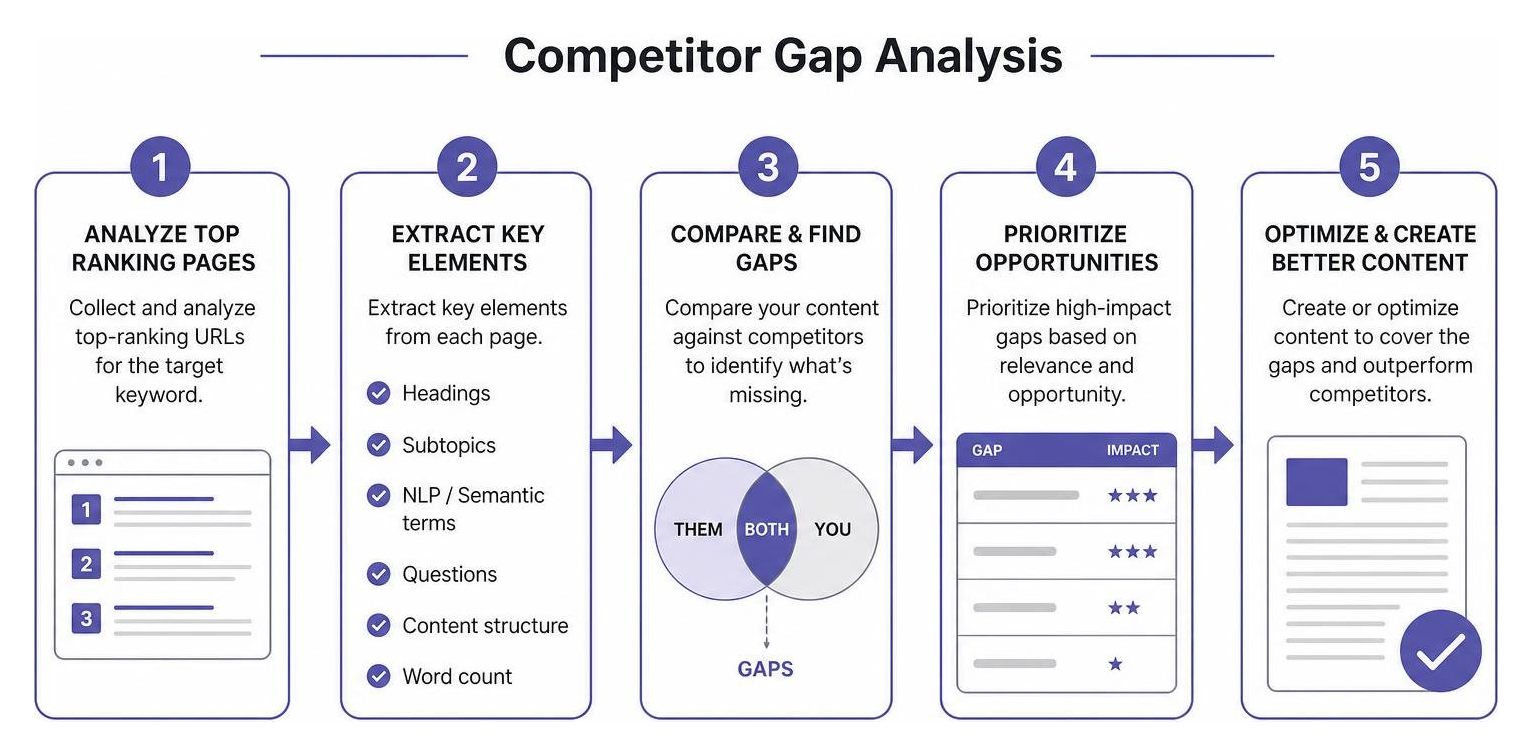
Clearscope excels at generating highly intuitive content briefs. It lists the exact terms your competitors are using, how often they use them, and the typical word count required to compete. MarketMuse takes this a step further by offering personalized difficulty metrics. Instead of a generic keyword difficulty score, it evaluates your site's existing authority on a topic to tell you how hard it will be for you to rank.
Frase focuses on streamlining the initial research phase. It automatically clusters competitor headings, pulls out common questions from forums like Reddit and Quora, and builds a comprehensive outline in minutes. Using these specialized assistants saves hours of manual research. To understand how these assistants elevate your writing workflow, take a look at my guide on Write Smarter Not Harder The Power Of An Seo Writing Assistant.
A major challenge when scaling content production is maintaining a consistent brand voice across different writers and AI engines. If your content sounds like it was written by five different robots, your audience will lose trust.
To combat this, modern tools have introduced advanced voice matching features. Some platforms analyze your existing content across multiple axes—such as formality, vocabulary, and sentence structure—to build a unique brand voice profile. This ensures that even automated drafts align with your established style guides.
Furthermore, seamless integrations with Google Docs and WordPress are critical. Writers can keep working in their preferred environments while receiving real-time optimization feedback. Additionally, tools like Grammarly run in the background to catch grammatical errors and style inconsistencies, ensuring your content is polished before it ever reaches your CMS. To see how these integrations fit into a fully automated pipeline, check out From Idea To Publish Automating Your Blog Writing Process.
Choosing between paid and free tools usually comes down to your budget, your production volume, and your scaling goals. While freelancers might get by with a mix of free tools and manual research, agencies producing dozens of articles a month need a centralized, paid platform to maintain efficiency and drive a clear ROI.
If you have the budget, investing in a premium seo copywriting tool is one of the fastest ways to scale your content production. These platforms provide the real-time data and collaborative features that professional teams require.
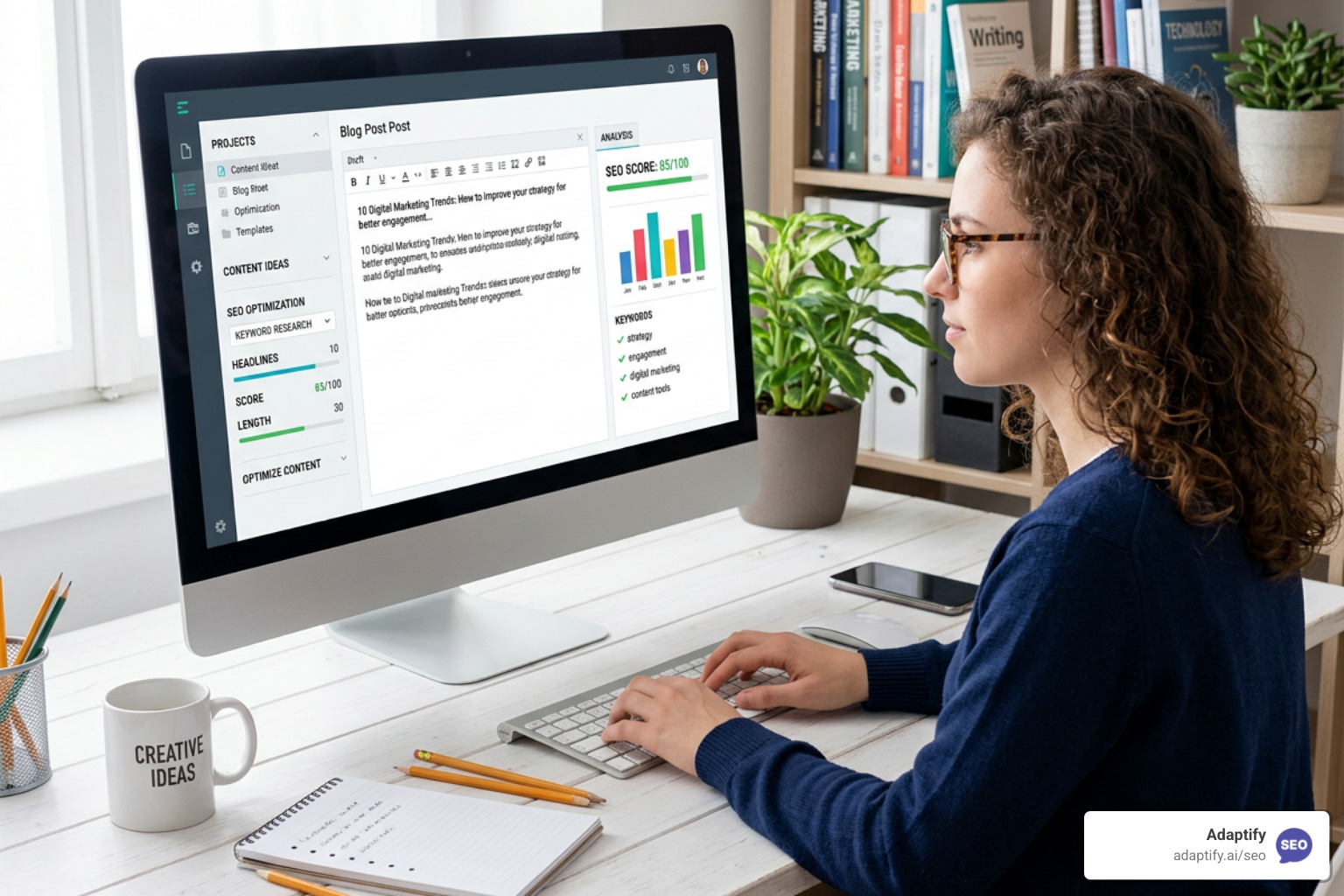
Surfer SEO remains a favorite for on-page optimization, starting at $89/month for its Essential plan. For larger teams, Clearscope Essentials ($189/month) and MarketMuse Optimize ($99/month) offer unmatched competitor analysis and personalized difficulty scoring. If your focus is primarily on high-volume AI drafting, Jasper's Creator Plan ($39/month) and Copy.ai's Starter Plan ($49/month) provide excellent templates and brand voice customization.
To help you compare these premium options, I've outlined their core features and entry-level pricing below:
| Tool | Starting Price | Best Feature | Ideal User |
|---|---|---|---|
| Clearscope | $189/mo | Google Docs integration & NLP terms | Established content teams |
| MarketMuse | $99/mo | Personalized authority & difficulty metrics | SEO strategists & niche publishers |
| Surfer SEO | $89/mo | Live content scoring & SERP analysis | Freelancers & growing agencies |
| Copy.ai | $49/mo | Automated workflows & marketing templates | Copywriters & growth marketers |
| Jasper | $39/mo | Long-form content generation & brand voice | Content creators & agencies |
Choosing the right paid tool depends on where your bottleneck lies. If you struggle with research and optimization, Surfer or Clearscope is your best bet. If you struggle to get words on the page, Jasper or Copy.ai will yield a faster return on investment. For an in-depth breakdown of how free and paid options compare in practice, read From Idea To Article Exploring Free And Paid Ai Blog Content Creators.
You don't need a massive budget to start optimizing your content. If you're a freelancer or a boot-strapped founder, there are several budget-friendly and free alternatives that can elevate your writing.
Wordtune is an excellent starting point, offering up to 20 free rewrites per day before upgrading to its $9.99/month plan. It's perfect for polishing rough sentences and improving readability. Smart Copy by Unbounce (formerly Snazzy AI) offers a free tier, with its next plan priced at $49/month for unlimited generations.
WriteSonic starts with a free trial and then costs just $15/month, making it a highly accessible option for budget-conscious creators. If you need straightforward, automated drafting, AI Writer starts at $19/month. Finally, Grammarly's premium plan ($12/month, billed annually) remains a must-have for catching complex spelling, punctuation, and structural issues. If you want to explore more budget-friendly generators to keep your pipeline moving, check out Stop Staring At The Cursor With These Top Ai Content Generators 1.
Despite the incredible progress in AI-driven writing, these tools have clear limitations. An AI can analyze data patterns and mimic structures, but it cannot conduct original research, interview industry experts, or understand the subtle emotional nuances of your target audience. If left entirely unedited, AI-generated content can feel generic, repetitive, and empty.
This is why human oversight remains essential. Human editors are needed to inject personality, verify factual accuracy, and ensure the content aligns with your brand's unique perspective. The magic happens when you combine automated efficiency with human creativity.
At Adaptify, we understand this balance perfectly. We offer automated SEO services designed specifically for agencies, streamlining everything from keyword strategy and content creation to high-quality PR link building. By leveraging advanced AI to handle the heavy lifting of research, drafting, and optimization, we allow your team to focus on the creative polish that truly converts readers. Explore how we can help you scale your operations by visiting our Adaptify AI Content Features page.

Stop being invisible: discover what the best local SEO strategies for small businesses are to dominate Google Maps, reviews, and AI search...
Master localized SEO to rank your local business in Google Maps and drive more in-store visits.

Master local retail SEO to drive foot traffic from Google with proven strategies for GBP, reviews, and AI search optimization.
Join 1,000+ agencies already delivering SEO and AI visibility from a single platform without increasing their headcount.Join 1,000+ agencies already delivering SEO and AI visibility from a single platform without increasing their headcount.