SEO Audit Made Easy: Step-by-Step Instructions




Conducting an SEO audit on your website is the first crucial step to improving its visibility on search engines like Google. This comprehensive check-up allows you to identify and troubleshoot various issues that could be hindering your site's performance. Whether it's on-page optimization, technical SEO issues, backlink quality, or user experience problems, an SEO audit aims to uncover hidden opportunities and fix critical errors.
If you're here for a quick overview on conducting an SEO audit, here are the main steps:
These steps will guide you to improve your site's search engine ranking without getting overwhelmed by the process.
I'm Hansjan Kamerling, a seasoned expert in SEO audits with years of experience working with AI startups and various digital marketing agencies. Over the years, I've helped numerous companies streamline their SEO strategies effectively, ensuring high visibility and better search engine rankings.

Before diving into the specifics of an SEO audit, it's crucial to define its scope. This includes setting a date range, identifying competitors, and selecting key SEO metrics. Here's how to get started:
To begin, decide what aspects of your website you want to audit. Typically, an SEO audit covers three main areas:
Action item: If you’re doing a quarterly or annual audit, cover all three areas. For monthly audits, focus on one area at a time.
Setting a date range helps put your audit findings into context. Will you be looking at data from the last month, quarter, or year? Having a benchmark allows you to compare data across different periods and identify trends.
Action item: Choose a date range that aligns with your business goals. This will help in making meaningful comparisons and recognizing trends.
Knowing who your competitors are can provide valuable insights into your own performance. Compare your SEO metrics with those of your competitors to see how you stack up.
Action item: Identify two to three competitors based on internal knowledge and organic search results. This will help you understand their strategies and see where you can improve.
Quantitative comparisons tell a compelling story. Here are some essential SEO metrics to consider:
Action item: Select these metrics to track and compare against your competitors. They provide a top-level overview that guides your SEO strategy.
By defining the scope, setting a date range, identifying competitors, and selecting key SEO metrics, you lay a solid foundation for a successful SEO audit. This ensures your audit is focused, relevant, and actionable.
Next, we'll dive into the technical aspects of an SEO audit, including how to crawl your website and spot indexing issues.
A technical SEO audit is essential for ensuring that your website is accessible and indexable by search engines. This section will guide you through the key steps to conduct a technical SEO audit effectively.
The first step in a technical SEO audit is to crawl your website. This process involves using tools to scan your site and identify any issues that might affect its performance.
Tools to Use:
These tools will help you find errors, warnings, and notices. Errors are critical issues that need immediate attention, while warnings and notices are less urgent but still important.
Key Features:
Action item: Conduct a full site crawl and review the results to identify any immediate issues.
Next, it's crucial to spot any indexing issues that could prevent search engines from properly indexing your site. This includes checking for:
Action item: Use your SEO tools to identify and fix any indexing issues. Pay special attention to redirect loops and incorrect status codes.
Your website’s on-page elements play a significant role in its SEO performance. Here are some key elements to check:
Action item: Review and optimize your title tags, meta descriptions, headings, and content quality.
Page speed is a critical factor for both user experience and SEO. Slow-loading pages can lead to higher bounce rates and lower rankings.
Metrics to Measure:
These metrics will help you understand how your pages are performing in terms of speed. Focus on optimizing:
Action item: Use tools like Google PageSpeed Insights to measure and optimize your page speed.
By following these steps, you’ll be well on your way to conducting a thorough technical SEO audit. Up next, we’ll dig into on-page SEO audits to further improve your website’s performance.
Now that you've tackled the technical side, it's time to dive into the on-page SEO audit. This involves evaluating the quality of your content, optimizing keywords, enhancing internal linking, and ensuring your social tags and localization settings are in place.
Content is king, but not just any content. Your content needs to be high-quality, relevant, and optimized for targeted keywords.
Key Areas to Focus On:
Action item: Review your content for relevance and keyword optimization. Use tools to check for and eliminate duplicate content.
Internal linking helps search engines understand the structure of your site and distribute page authority. Social tags ensure your content is shared effectively on social media platforms.
Internal Linking Suggestions:
Social Tags:
Action item: Use tools like Screaming Frog to get internal linking suggestions. Ensure your social tags are properly set up for better social media visibility.
If your website targets multiple languages or regions, proper localization and hreflang tags are crucial.
Localization:
Hreflang Issues:
Action item: Audit your hreflang tags to ensure they are correctly implemented. Use tools to visualize and fix any issues.
By focusing on these on-page elements, you can significantly improve your website's performance. Next, we’ll dig into the off-page SEO audit to further boost your site's visibility.
After refining your on-page elements, it's time to look beyond your website. An off-page SEO audit focuses on factors outside your site that impact search engine rankings. This includes analyzing backlinks, enhancing user experience, ensuring mobile-friendliness, and leveraging structured data.
Backlinks are like votes of confidence from other websites. However, not all backlinks are created equal. Quality matters more than quantity.
Key Areas to Focus On:
Action item: Use Ahrefs or SEOptimer to audit your backlinks. Focus on acquiring high-quality backlinks and addressing orphan pages.
User experience (UX) is crucial for SEO. A site that's easy to use and loads quickly keeps visitors engaged.
Key Areas to Focus On:
Action item: Test your site’s speed and mobile-friendliness using tools like PageSpeed Insights. Optimize for faster load times and better mobile experience.
Structured data helps search engines understand your content better, which can lead to rich results in SERPs.
Key Areas to Focus On:
Action item: Implement and validate structured data using Google’s Structured Data Testing Tool and Schema.org guidelines. Aim for rich results to improve your visibility in SERPs.
By focusing on these off-page elements, you can boost your website's authority and user experience, leading to better search engine rankings. Next, we’ll explore the tools you can use for a comprehensive SEO audit.
When it comes to performing a comprehensive SEO audit, having the right tools can make all the difference. Here are some of the best tools to help you identify and fix SEO issues:
SEOmator is a powerful tool that offers a detailed analysis of your website's SEO, including technical and on-page factors. It tracks your pages to see how well your site stacks up against competitors. With SEOmator, you get insights into:
Start your audit with SEOmator to uncover critical SEO issues and hidden opportunities.
Google Search Console is a free tool provided by Google that helps you monitor and maintain your site’s presence in Google Search results. Key features include:
Using Google Search Console is essential for understanding how Google views your site.
Google PageSpeed Insights API provides reports on the performance of your pages on both mobile and desktop devices. It offers:
Fast-loading pages are crucial for both user experience and SEO, making this tool indispensable.
Looker Studio (formerly Google Data Studio) allows you to create custom reports and dashboards. By integrating with various data sources like Google Search Console and PageSpeed Insights, you can:
Looker Studio is perfect for those who want to visualize and share their SEO data effectively.

By using these tools, you can perform a thorough SEO audit and take actionable steps to improve your site's performance. Next, we’ll answer some frequently asked questions about SEO audit.
An SEO audit is a comprehensive examination of a website to evaluate its performance in search engine results. The goal is to identify areas for improvement to increase visibility and drive more organic traffic. An SEO audit covers various aspects, such as:
A well-executed SEO audit helps you understand your website’s strengths and weaknesses, providing a roadmap for optimization.
The frequency of performing an SEO audit can vary based on your website’s size and activity. Here are some general guidelines:
Regular audits help you stay ahead of issues that could affect your search rankings. For instance, changes in Google’s algorithms or new competitor strategies can impact your site’s performance. Regular checks ensure you’re always optimized for the latest SEO trends.
Choosing the right tools can streamline your SEO audit process and provide detailed insights. Here are some of the best tools to consider:
By leveraging these tools, you can perform thorough SEO audits and take actionable steps to improve your website’s performance.

Each tool has its strengths, so choose the ones that best fit your needs and budget.
In today's competitive digital landscape, performing regular SEO audits is crucial for maintaining and improving your website's search engine rankings. At Adaptify.ai, we understand that this can be a time-consuming and complex process. That’s why we offer automated SEO services designed to streamline your SEO efforts.
Adaptify.ai provides a comprehensive SEO solution that covers all aspects of SEO auditing—from technical SEO and on-page optimization to off-page SEO and user experience. Our platform uses advanced algorithms to automatically scan your website for over 170+ technical and on-page SEO issues, prioritizing them so you know which ones to fix first. This reduces the manual effort required and ensures that no critical issues are overlooked.
By leveraging automated SEO services, you can enjoy reduced manual effort and improved efficiency in your SEO strategy. Our tool offers real-time monitoring, so you’re always up-to-date with any changes that might affect your site’s performance. Additionally, our integration with platforms like Google Search Console and PageSpeed Insights API provides deeper insights and more accurate data.
Imagine focusing more on creating quality content and less on the nitty-gritty of SEO auditing. With Adaptify.ai, that’s possible.
Ready to take your SEO to the next level? Sign up for Adaptify.ai and let us handle the heavy lifting.
By following these steps and leveraging tools like Adaptify.ai, you’ll be well on your way to a well-optimized, high-performing website. Happy auditing!

Master SEO monitoring with key metrics and tools to track rankings, technical health, and organic growth for continuous performance optimi...

The Best Online Keyword Monitoring Tools for Real-Time Alerts - Learn about online keyword monitoring tool
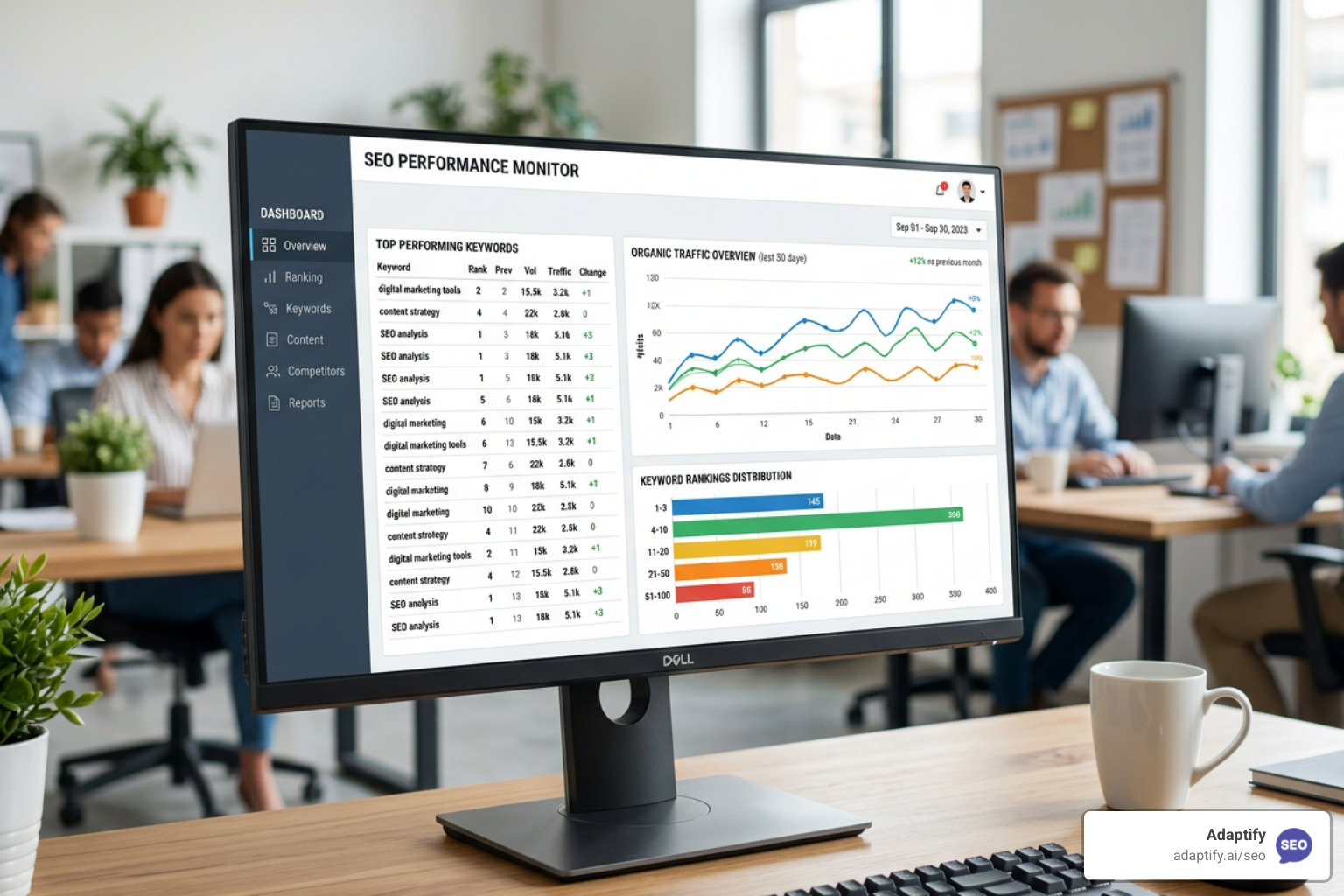
Stop Flying Blind with These Top SEO Monitor Tools - Learn about seo monitor tools
Join 1,000+ agencies already delivering SEO and AI visibility from a single platform without increasing their headcount.Join 1,000+ agencies already delivering SEO and AI visibility from a single platform without increasing their headcount.