Stop Chasing Broken Tags With Automated SEO Testing




Automated SEO testing uses scheduled scans and deployment checks to catch issues such as broken links, missing metadata, crawl blocks, invalid schema, and slow page performance before they hurt visibility.
For agency owners, the value is simple: fewer manual checks, faster fixes, and more consistent results across every client site. Instead of discovering a missing canonical tag or broken internal link weeks after a release, your team can flag it when the change goes live.
Search visibility is no longer something agencies can safely audit once a quarter. Websites change constantly. Content teams publish pages, developers release updates, plugins alter templates, and site migrations introduce risk. A single broken template can repeat the same problem across hundreds or thousands of URLs.
The good news is that many SEO failures are testable. Clean, structured code helps search engines understand a site, and it also makes the experience easier to use for people relying on screen readers, keyboard navigation, and other assistive technology. That overlap makes automated testing a practical way to protect rankings, usability, and compliance without multiplying manual work.
I'm Luke Heinecke, CRO at Adaptify, with more than nine years of experience in marketing, agency operations, and building scalable SEO processes. Having founded and exited a performance marketing agency, I have seen how automated SEO testing helps teams replace repetitive checks with systems that support reliable client growth.
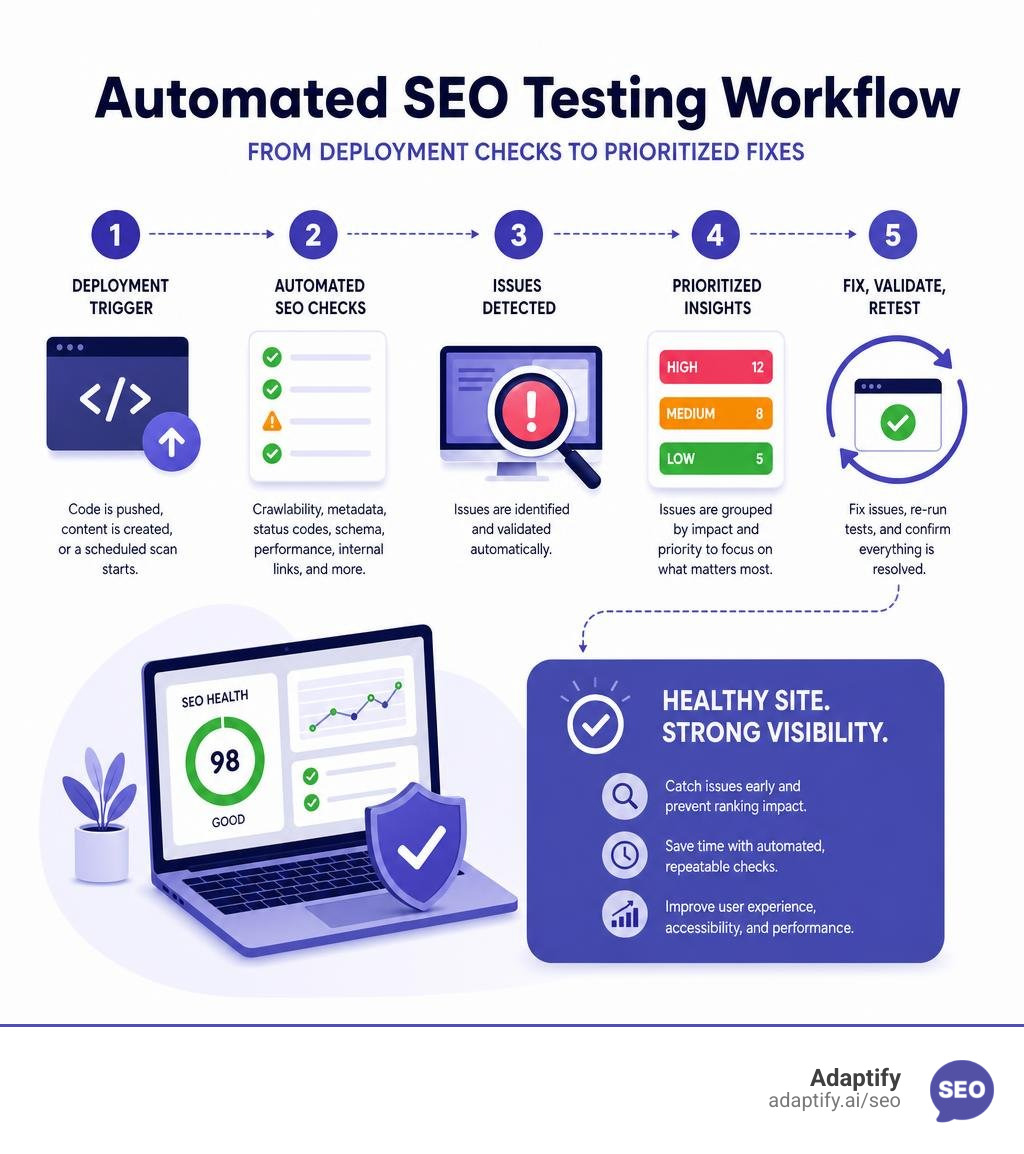
In 2026, relying on periodic manual site audits is like driving with your eyes closed and checking the rearview mirror once a month. Search algorithms evolve rapidly, code pushes happen daily, and web environments are more complex than ever. When you manage dozens of enterprise client sites, manual spot checks inevitably let critical crawlability issues slip through the cracks.
Automated testing bridges the gap between when an error occurs and when it gets resolved. By setting up automated guardrails, your team captures code regressions before search engine bots crawl damaged pages.
At its core, automated SEO testing involves running programmatic checks against site architecture, page metadata, schema markup, and performance metrics. These tools act as continuous monitoring systems that audit websites across crucial health dimensions.
When an automated testing pipeline fires, it systematically validates key elements across your site:
By shifting away from slow manual checks, you can learn more about Beyond Manual: Unlocking Efficiency with Automated SEO Tasks to save hundreds of hours of engineering time while keeping technical health pristine.

The true business value of continuous SEO verification is risk mitigation. When a developer accidentally deploys a noindex tag across a staging environment that leaks into production, organic traffic can plummet overnight.
Continuous testing protects revenue by validating every release. Integrating verification checks into release engineering pipelines guarantees that minor updates don't trigger massive traffic losses. Exploring The Future is Now: Mastering Automated SEO for Better Results helps illustrate how enterprise teams move faster without breaking search performance.
A major advantage of modern technical optimization is that SEO and web accessibility share the exact same technical foundation. Clean, semantic HTML helps search engine crawlers interpret page structure, which is identical to how screen readers parse content for visually impaired users.
Web Content Accessibility Guidelines (WCAG 2.2) and ADA compliance mandate clear site architecture and accessible media. Fortunately, fixing accessibility issues directly boosts search engine rankings:
<h1> through <h6> structures allow screen readers to jump through content efficiently while signaling keyword hierarchy to search bots.When you address both disciplines together, user experience improves dramatically, reducing bounce rates and driving higher on-page conversions. To get your monitoring infrastructure running properly, check out How to Set Up Automated SEO Monitoring for Success.
Combining SEO and accessibility audits cuts platform costs, reduces duplicate engineering tasks, and ensures full legal compliance.
| Audit Feature | Standalone SEO Audits | Unified SEO & Accessibility Testing |
|---|---|---|
| Engineering Overhead | High (Duplicate tickets across teams) | Low (Single fix resolves dual issues) |
| Code Base Optimization | Focuses strictly on bots | Optimizes for bots, screen readers, and users |
| Compliance Risk | Ignores ADA/WCAG legal mandates | Ensures continuous legal compliance |
| UX & Conversion Impact | Indirect user benefits | Direct user experience improvements |
Implementing automated SEO testing doesn't require building a proprietary platform from scratch. Modern agencies combine lightweight scripts, low-code automation, and developer integrations to create seamless auditing stacks.
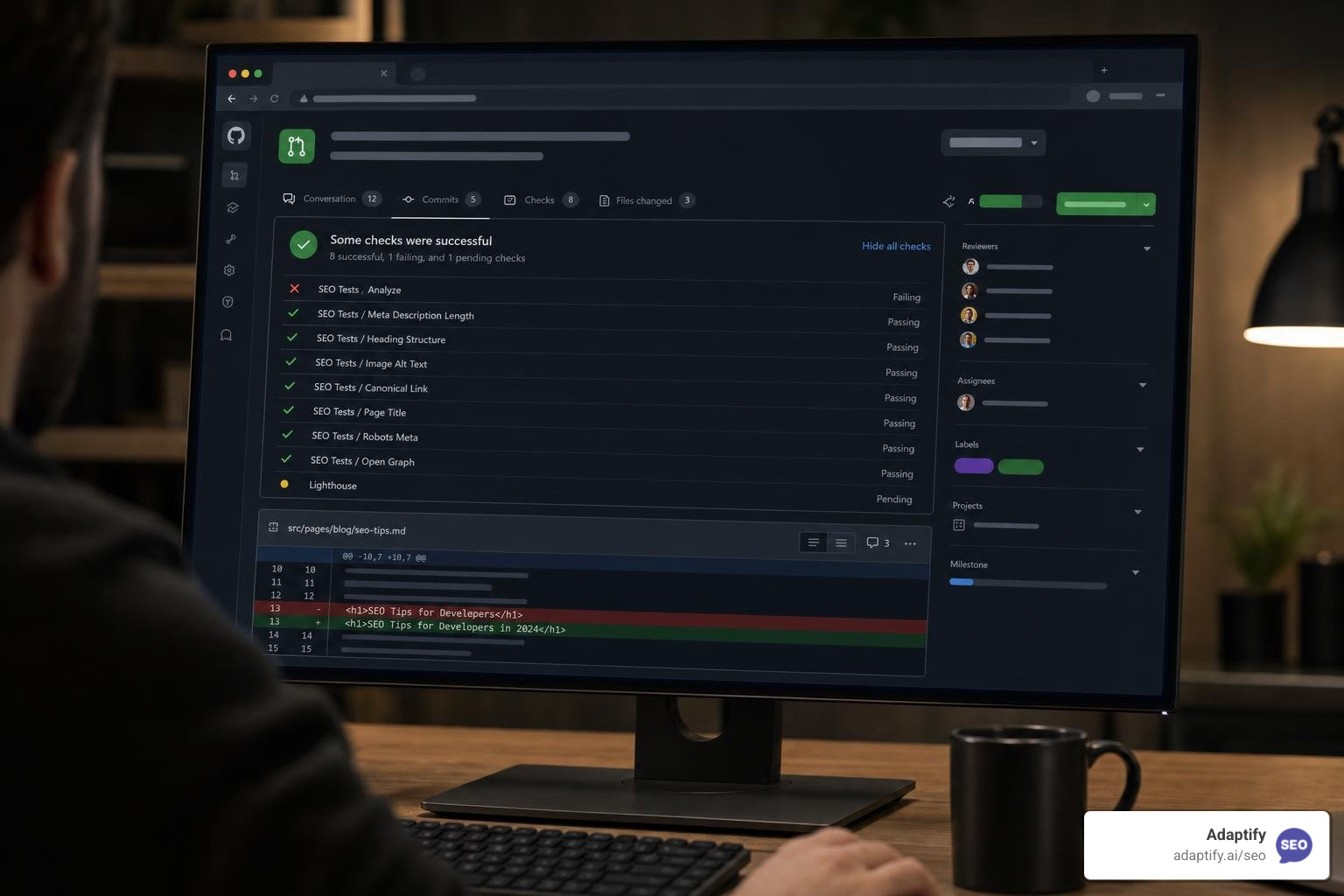
The best time to catch an SEO error is before code gets pushed live. By introducing "shift-left" testing into your continuous integration and continuous deployment (CI/CD) pipelines, you make SEO checks a non-negotiable step in software release workflows.
Using tools like GitHub Actions or Cypress, developers can run automated test scripts on pull requests. If a pull request modifies template files and accidentally drops alt tags or canonical URLs, the automated check fails the build, preventing faulty code from reaching production.
If your team prefers low-code setups, you can connect workflow platforms like n8n directly to custom auditing scripts.
For plugins and extension comparisons, read our guide on how to Set It and Don’t Regret It: Automated SEO Plugins Compared. For broader marketing integration, explore Beyond Manual: Streamlining Your Marketing with Content Automation.
To prevent your team from drowning in alert fatigue, follow standard governance rules:
noindex directives) rather than minor stylistic warnings.Adopting automated testing platforms often comes with operational hurdles, particularly in larger enterprise settings.
Developers often complain about "tool overload," while marketing teams feel frustrated when technical tickets get buried. Overcome this friction by establishing cross-functional alignment around shared goals.
Standardize criteria so both development and SEO teams agree on what constitutes a "critical bug." When a unified dashboard highlights how a broken template hurts both accessibility compliance and organic traffic, cross-departmental buy-in happens naturally.
Instead of treating technical SEO as a reactive cleanup campaign after a drop in search visibility, treat component layout templates as your primary unit of testing.
By testing global header templates, navigation scripts, and footer schema at the design system level, structural fixes scale across thousands of child pages instantly. This proactive safeguard ensures your site stays optimized regardless of how fast your content library grows.
Focus first on critical indexability signals: server status codes, canonical tags, robots.txt disallows, and meta robots tags. Once baseline crawlability is verified, prioritize Core Web Vitals (LCP, INP, CLS), schema validation, broken internal links, and missing HTML headings or title tags.
No. Automation handles repetitive technical verification at massive scale, catching structural breaks instantly. However, manual checks remain essential for evaluating content intent, topical depth, overall UX, link-building strategy, and high-level competitive positioning.
Automated tools perform pre-launch and post-launch crawl comparisons across staging and live environments. They verify 301 redirect mapping, check XML sitemaps, and alert you to missing tags in real time before search engines index broken pages.
Chasing broken tags manually is a waste of your agency's valuable time. By embracing automated SEO testing alongside web accessibility validation, you create an automated safeguard that protects client search rankings, boosts usability, and maintains continuous compliance.
If you're ready to automate your technical operations, content creation, and organic growth, explore how the Adaptify AI SEO Solution transforms manual workflows into continuous growth engine systems. Check out our flexible Adaptify Pricing or book a personalized Adaptify Demo today to scale your agency operations efficiently.

Stop being invisible: discover what the best local SEO strategies for small businesses are to dominate Google Maps, reviews, and AI search...
Master localized SEO to rank your local business in Google Maps and drive more in-store visits.
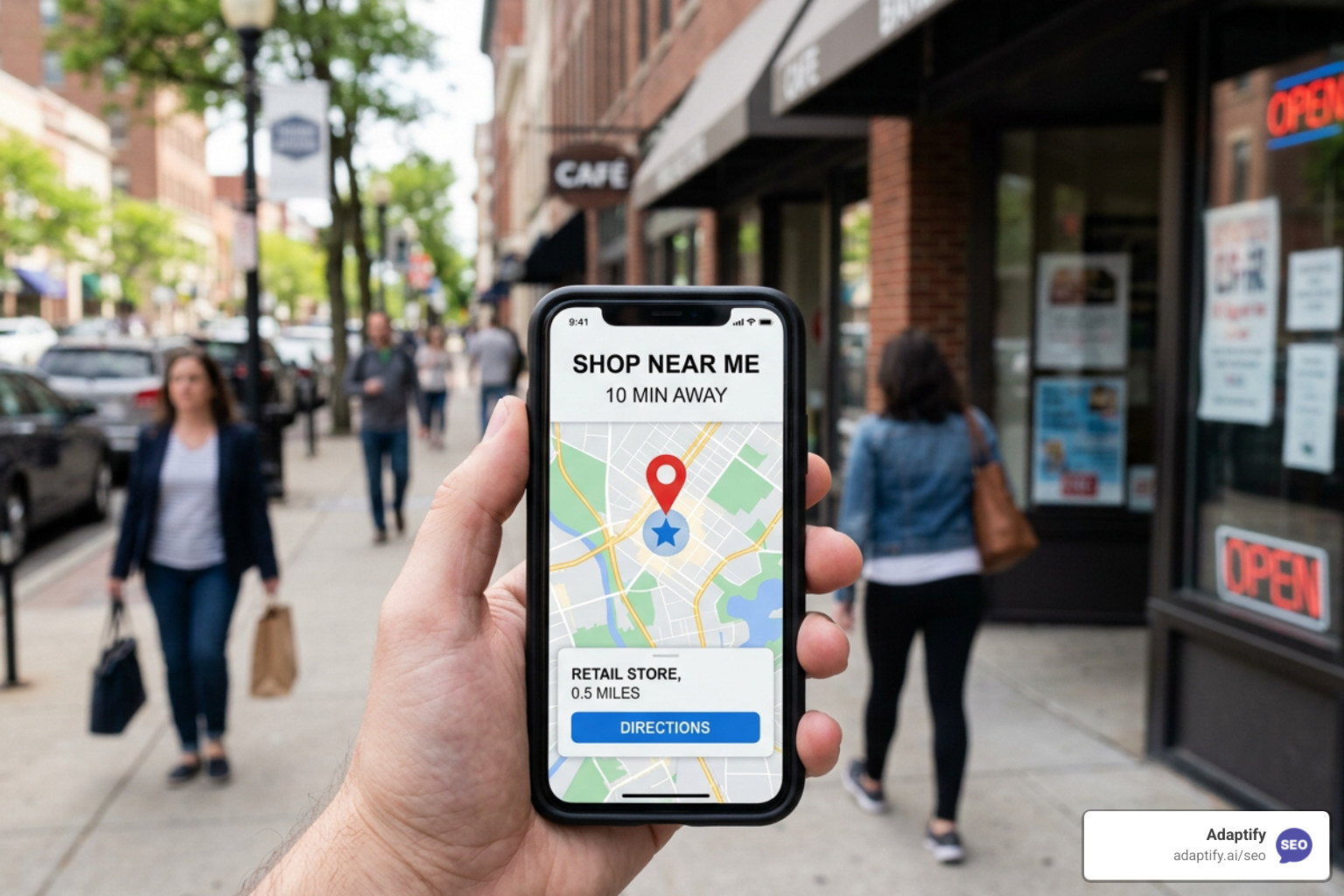
Master local retail SEO to drive foot traffic from Google with proven strategies for GBP, reviews, and AI search optimization.
Join 1,000+ agencies already delivering SEO and AI visibility from a single platform without increasing their headcount.Join 1,000+ agencies already delivering SEO and AI visibility from a single platform without increasing their headcount.