Why Your Real Estate Website Needs a Local SEO Makeover Right Now




Local SEO for real estate is the practice of optimizing your online presence so that buyers and sellers in your area find you — not Zillow — when they search Google for homes, agents, or neighborhoods near them.
Here's what local SEO for real estate covers at a glance:
Think about this for a moment. Over 90% of homebuyers begin their search online. And 46% of all Google searches have local intent — meaning people are looking for something near them, right now. Yet most real estate agents are either invisible in local search or buried beneath mega-portals like Zillow and Redfin that have domain authority scores in the 90s.
The gap between being found and being ignored often comes down to a handful of specific, fixable things. A Google Business Profile that's half-filled out. NAP data that says "St." on one site and "Street" on another. No neighborhood pages. No reviews in the last three months.
These aren't minor details. One case study found that a single 12-hour NAP cleanup moved an agent from position 8 to position 2 in the local pack — with a measurable six-figure increase in commissions as a result.
The good news? You don't need to outspend Zillow. You need to out-local them.
I'm Hansjan Kamerling, a product designer and marketing consultant who has helped scale digital platforms — including Rightmove, one of the largest property portals in the UK — and I've spent years applying those same principles to local SEO for real estate to help agents build predictable, owned lead pipelines. Let's walk through exactly how to do it.
In May 2026, the digital landscape for property has shifted. We are no longer just fighting for "keywords"; we are fighting for entity authority. Local SEO for real estate differs from general SEO because it prioritizes geographic relevance over broad reach. While general SEO might try to rank for "how to sell a house," local SEO ensures you appear when someone in Indianapolis searches for "best real estate agent near me."
The crown jewel of this strategy is the Google Map Pack (or 3-Pack). Research shows that this section captures roughly 33% of all local search clicks. If you aren't in those top three spots, you're essentially handing a third of your potential market to your competitors. Unlike national portals that rely on massive data aggregation, your advantage lies in "prominence" and "proximity"—two of Google's core local ranking factors.
By focusing on local intent, you're attracting leads that are further down the sales funnel. Someone searching for "homes for sale in [Specific Neighborhood]" is usually 2-4 weeks away from making an offer, whereas someone searching for "mortgage rates" might be a year away. Mastering Indianapolis SEO: What Every Local Business Needs to Know is the first step in understanding how these geographic signals drive real-world revenue.

Your Google Business Profile (GBP) is your new homepage. In 2026, many users will call you or book a showing directly from the search results without ever visiting your actual website. To win here, you must select the correct primary category—usually "Real Estate Agent" or "Real Estate Agency."
Don't stop at the basics. Use the "Service Areas" feature to list specific zip codes you cover, and treat Google Posts like a social media feed. Posting weekly updates about new listings or local market trends signals to Google that your business is active and relevant. For a deeper dive into these tactics, check out this Local SEO for Real Estate Agents: Complete Strategy Guide (2026) | Jeff Lenney.
I often see agents spending thousands of dollars a month on Zillow or Redfin leads. While these portals have their place, they are "rented" real estate. The moment you stop paying, the leads vanish. Furthermore, you're often competing with five other agents for the same lead.
Local SEO for real estate offers "owned" lead generation. The ROI is significantly higher because organic search drives 300% more traffic than social media, and "near me" searches convert at a rate 3x higher than broad city searches. Investing in your own search presence builds a "competitive moat" that protects your brand from price hikes by third-party platforms. Finding the right partner to build this engine is key, as explored in Finding Your SEO Soulmate in Indianapolis.
If I could give you only one piece of advice, it would be this: treat your GBP with more respect than your LinkedIn profile. A fully optimized GBP can generate 15-25 monthly calls, compared to just 2-5 for an incomplete one.
To maximize your visibility, you need to focus on Review Velocity and Transaction Language. It’s not just about having 100 reviews; it’s about getting 2-4 new reviews every month. When your clients leave reviews, encourage them to use specific neighborhood names and mention the service provided (e.g., "best agent for selling my home in Broad Ripple"). This helps Google associate your "entity" with specific geographic locations.
Steps for a 2026-ready GBP:
Monitoring this success is vital. Use tools for Google Business Profile Tracking: How to Monitor Your Local Search Success to see exactly how many people are finding you via Maps versus Search.
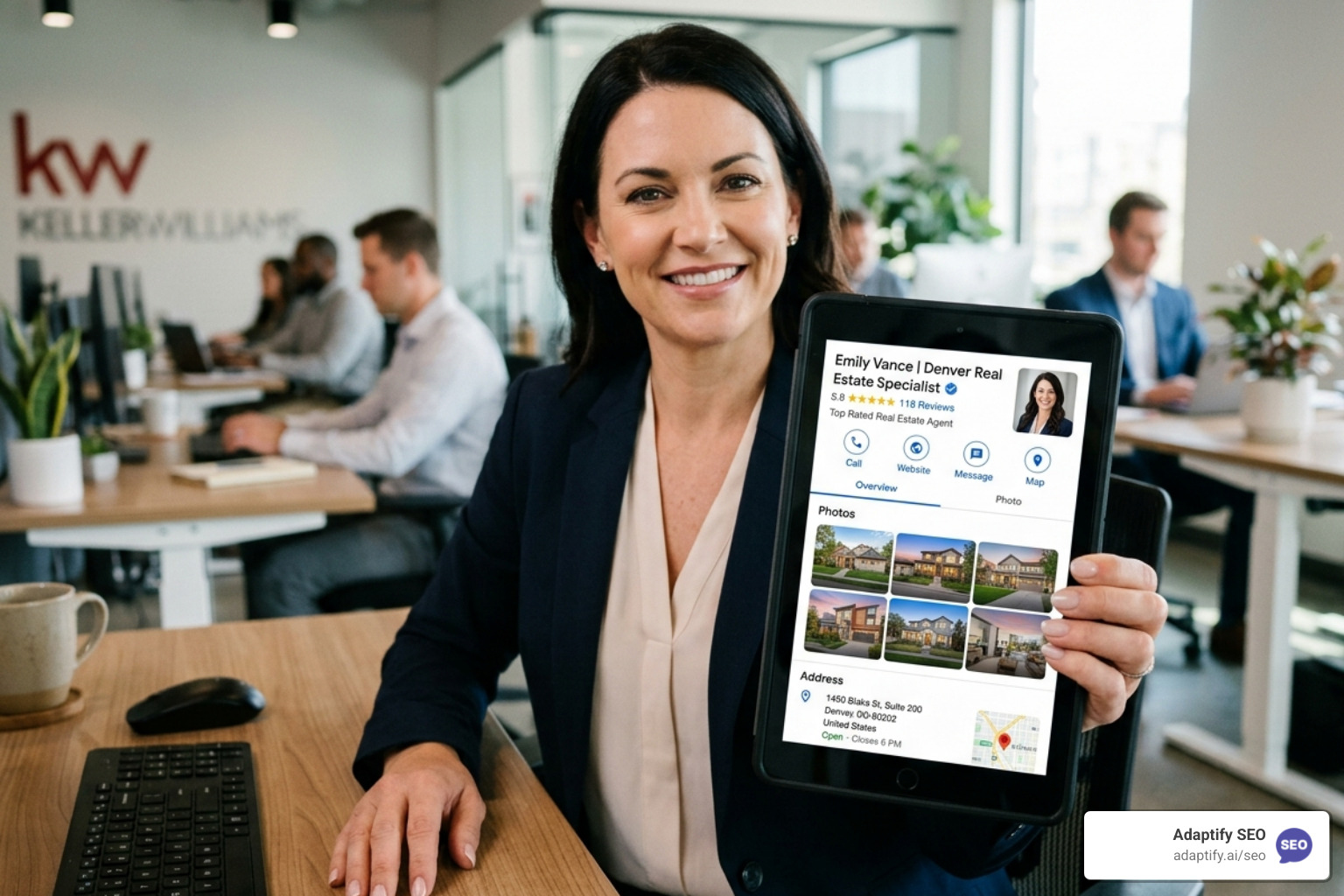
NAP stands for Name, Address, and Phone number. In the eyes of Google's algorithm, consistency equals trust. If your website says "123 Main Street" but your Yelp profile says "123 Main St," Google sees two different entities. This creates "algorithmic friction" that can suppress your rankings.
| Feature | Local SEO (Your Website) | National Portals (Zillow/Redfin) |
|---|---|---|
| Cost | Fixed investment/Long-term equity | Monthly subscription/High fees |
| Lead Quality | High (Exclusive to you) | Medium (Shared with others) |
| Authority | You are the expert | They are the middleman |
| Intent | Hyperlocal/Specific | Broad/Generic |
To fix this, I recommend a manual audit of the "Big Three" (Google, Bing, Apple Maps) and the major real estate directories (Zillow, Realtor.com, Yelp). Consistency takes about 8-12 hours of manual work, but the payoff is immense. For beginners, Cracking the Local Code: A Beginner's Guide to SEO Success provides a roadmap for managing these citations without losing your mind.
Backlinks are the "votes of confidence" of the internet. For real estate, one link from your local Chamber of Commerce or a neighborhood association is worth more than ten links from a national blog. Why? Because it anchors your website to a specific physical location.
Consider sponsoring a local Little League team or a high school theater program. Often, these organizations will link to your site from their "Sponsors" page. These are high-quality, relevant local signals that tell Google you are a pillar of the community. You can track how these links impact your visibility using Local Rank Tracking: The Secret Sauce for Hyperlocal Visibility.
This is where you can truly beat Zillow. Zillow is great at showing data (price, square footage, tax history), but it is terrible at describing "vibe." A computer can't tell you that the Friday afternoon traffic on 86th Street is a nightmare, or that the best latte in town is at the corner shop three blocks away.
By creating neighborhood guides, you provide "information gain"—unique value that AI and big data cannot replicate.
According to the Realtor's Guide to Hyperlocal SEO: Data Reveals How to Dominate Neighborhood Searches in 2026 - Santa Rosa Homes, focusing on these long-tail, hyper-specific terms allows agents with lower domain authority to outrank the giants for the searches that actually matter.
To ensure Google understands your hyperlocal content, you need to use Schema Markup. This is a piece of code that tells search engines exactly what your data means. For real estate, you should implement RealEstateListing and RealEstateAgent schema. This can result in "Rich Snippets" in search results, showing your price ranges, ratings, and even specific property features directly on the results page.
Technical health is also non-negotiable. With over 60% of real estate searches happening on mobile, a site that takes more than three seconds to load will lose half its visitors. Ensure your IDX (Internet Data Exchange) integration is "indexable," meaning Google can actually read the listings on your site rather than seeing them as a blank window. For more advanced strategies, see Beyond the Block: Local SEO Strategies Every Agency Needs to Know.
Typically, you will start to see movement in your rankings within 3 to 6 months. However, meaningful lead volume usually takes 6 to 12 months of consistent effort. SEO is a marathon, not a sprint. The "sweet spot" occurs when your review velocity, content creation, and technical health all start working in harmony.
Yes, but only if you stop trying to compete for broad terms like "homes for sale." You will never outrank Zillow for that. However, you can outrank them for "Victorian homes near Railroad Square" or "best walkable neighborhoods in [City]." By going deep into niche, long-tail keywords, you win on relevance where they lose on generality.
NAP consistency (Name, Address, Phone) is a trust signal. If your information is fragmented across the web, Google’s algorithm becomes "confused" about your business's legitimacy. This acts as a ranking penalty. Perfect consistency across 50+ directories tells Google you are a real, reliable local business.
The real estate market in 2026 is more competitive than ever, but the opportunity for local dominance has never been greater. By moving away from a total reliance on paid portals and building your own local SEO for real estate engine, you are taking control of your business's future.
At Adaptify.ai, I've seen how automation can change the game for agencies and agents who don't have 40 hours a week to spend on manual SEO tasks. We streamline the "boring" parts—like technical audits, content clusters, and link building—so you can focus on what you do best: closing deals and building relationships.
If you're ready to stop renting your leads and start owning your market, it’s time to Scale your agency with automated backlinks and build a digital storefront that works as hard as you do.
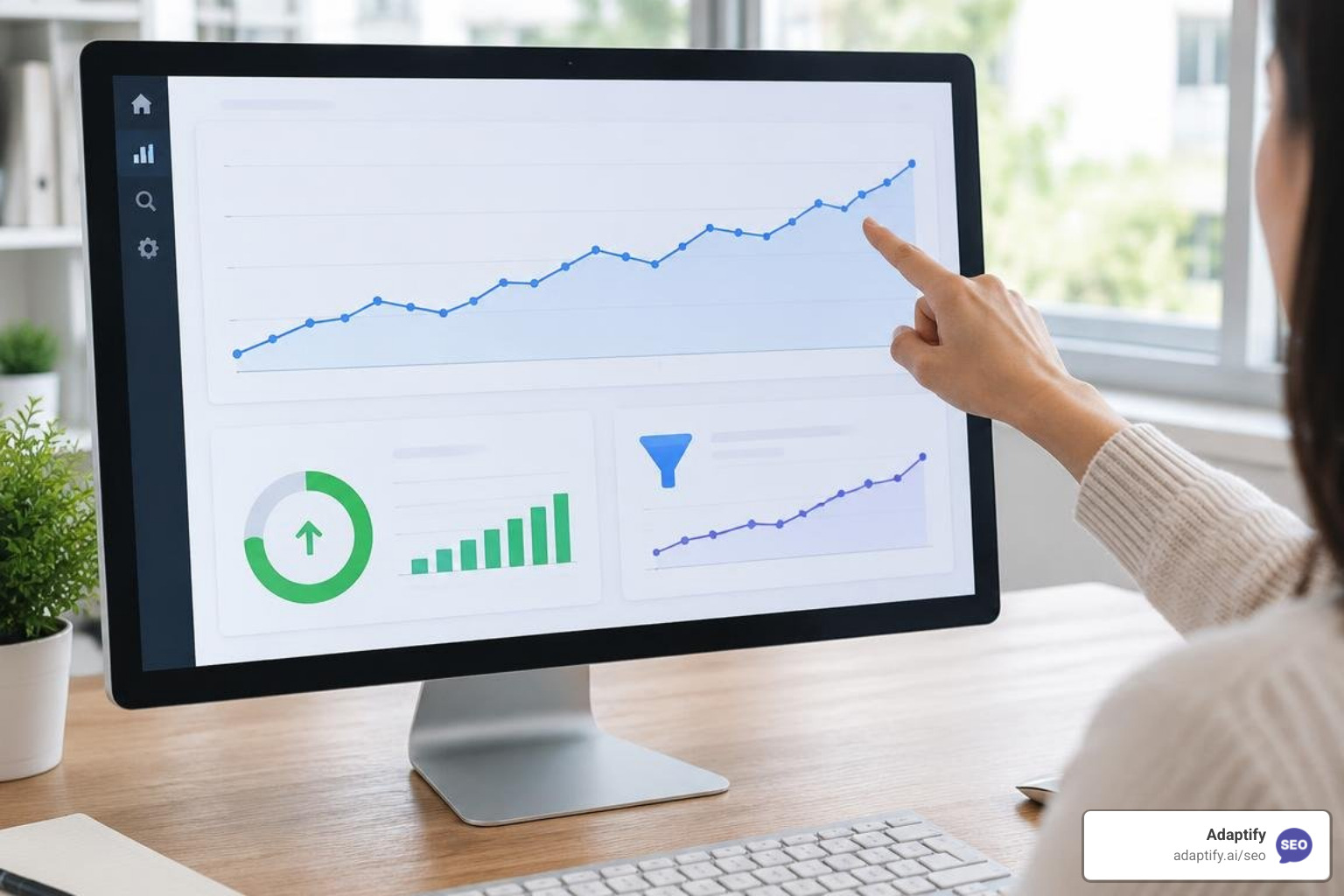
Master SEO monitoring with key metrics and tools to track rankings, technical health, and organic growth for continuous performance optimi...
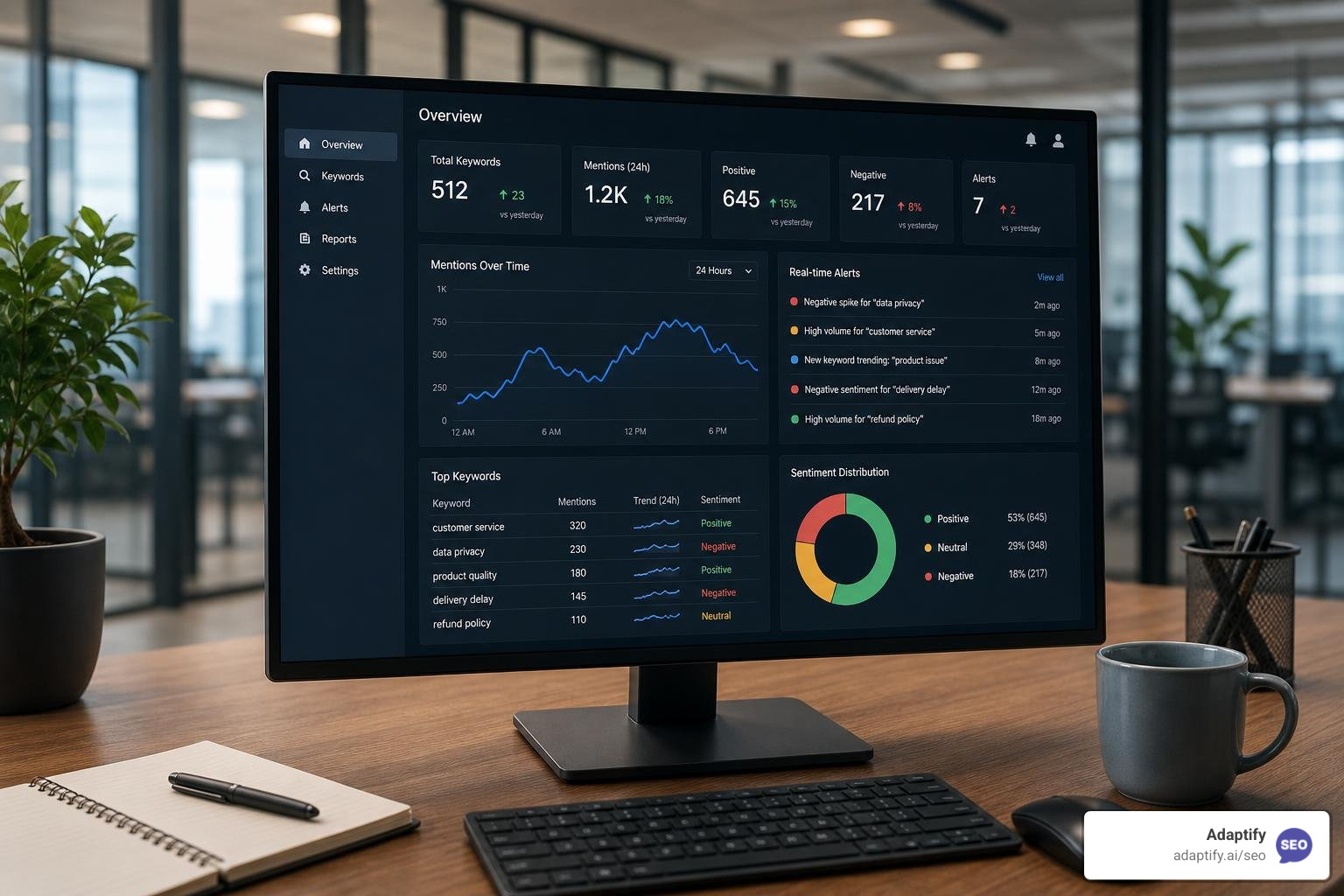
The Best Online Keyword Monitoring Tools for Real-Time Alerts - Learn about online keyword monitoring tool
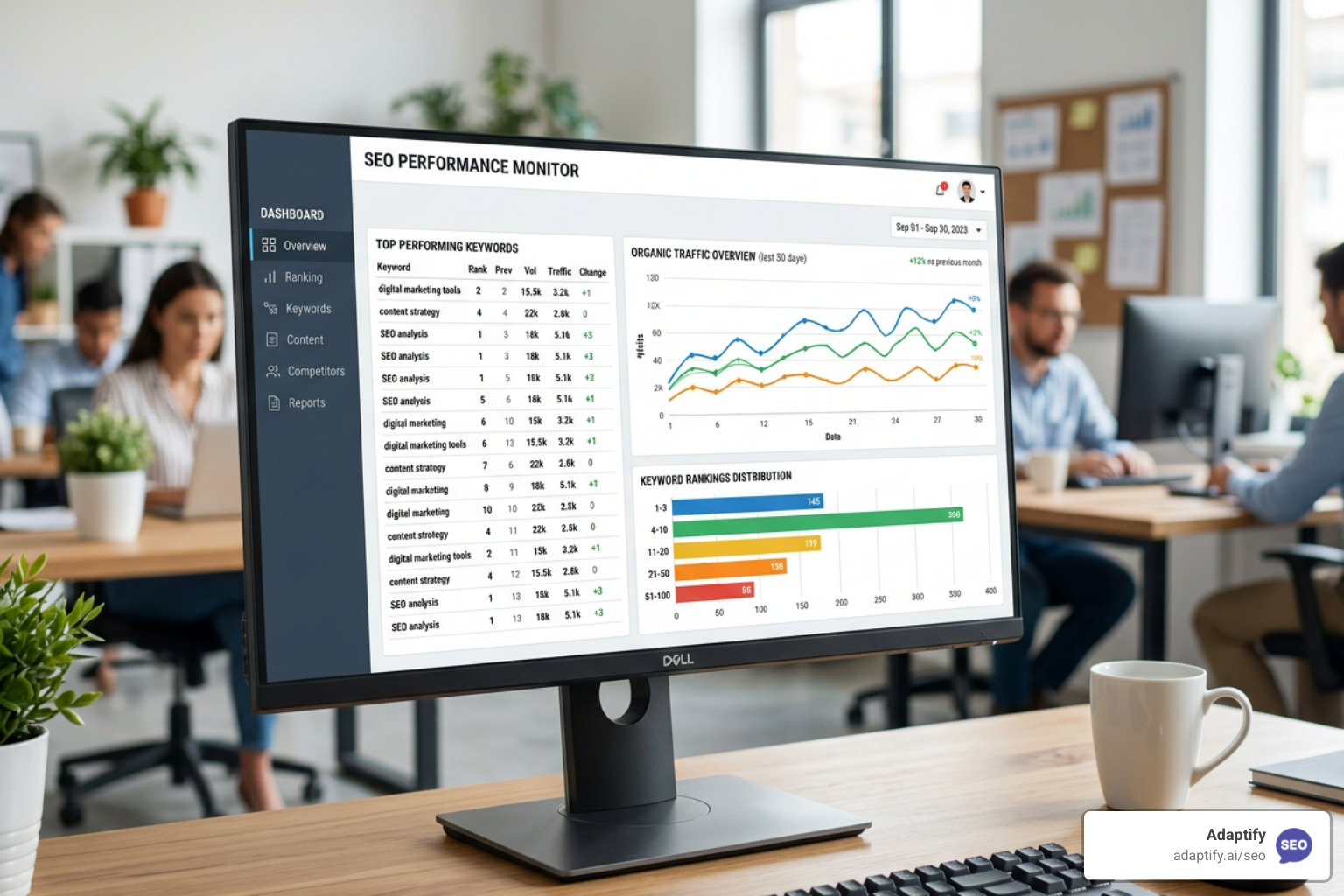
Stop Flying Blind with These Top SEO Monitor Tools - Learn about seo monitor tools
Join 1,000+ agencies already delivering SEO and AI visibility from a single platform without increasing their headcount.Join 1,000+ agencies already delivering SEO and AI visibility from a single platform without increasing their headcount.