The Clean Link-Building Proposal That Won’t Raise Red Flags



A winning, red-flag-free off-page SEO proposal outlines a transparent strategy centered on clean digital PR, audit-backed competitor gap data, strict domain vetting criteria, and countable monthly deliverables. By defining exact placement standards, structured 90-day roadmaps, and measurable business outcomes instead of transactional link purchases, agencies build immediate buyer trust and demonstrate tangible ROI.

For years, pitching link building felt like selling snake oil. Clients were right to be suspicious: agencies promised hundreds of directory submissions, bought links from private blog networks, and left website owners with algorithmic penalties. In 2026, search engines evaluate authority through Google's Experience, Expertise, Authoritativeness, and Trustworthiness (E-E-A-T) framework, meaning external validation must come from genuine third-party endorsements.
Modern search engines don't just count hyperlinks; they analyze entity authority across the web. According to Forrester research, the average B2B proposal-stage win rate sits around 31%. When you pitch off-page SEO as a strategic digital PR and brand-building campaign rather than a transactional link-buying scheme, your pitch immediately separates you from low-tier competitors.
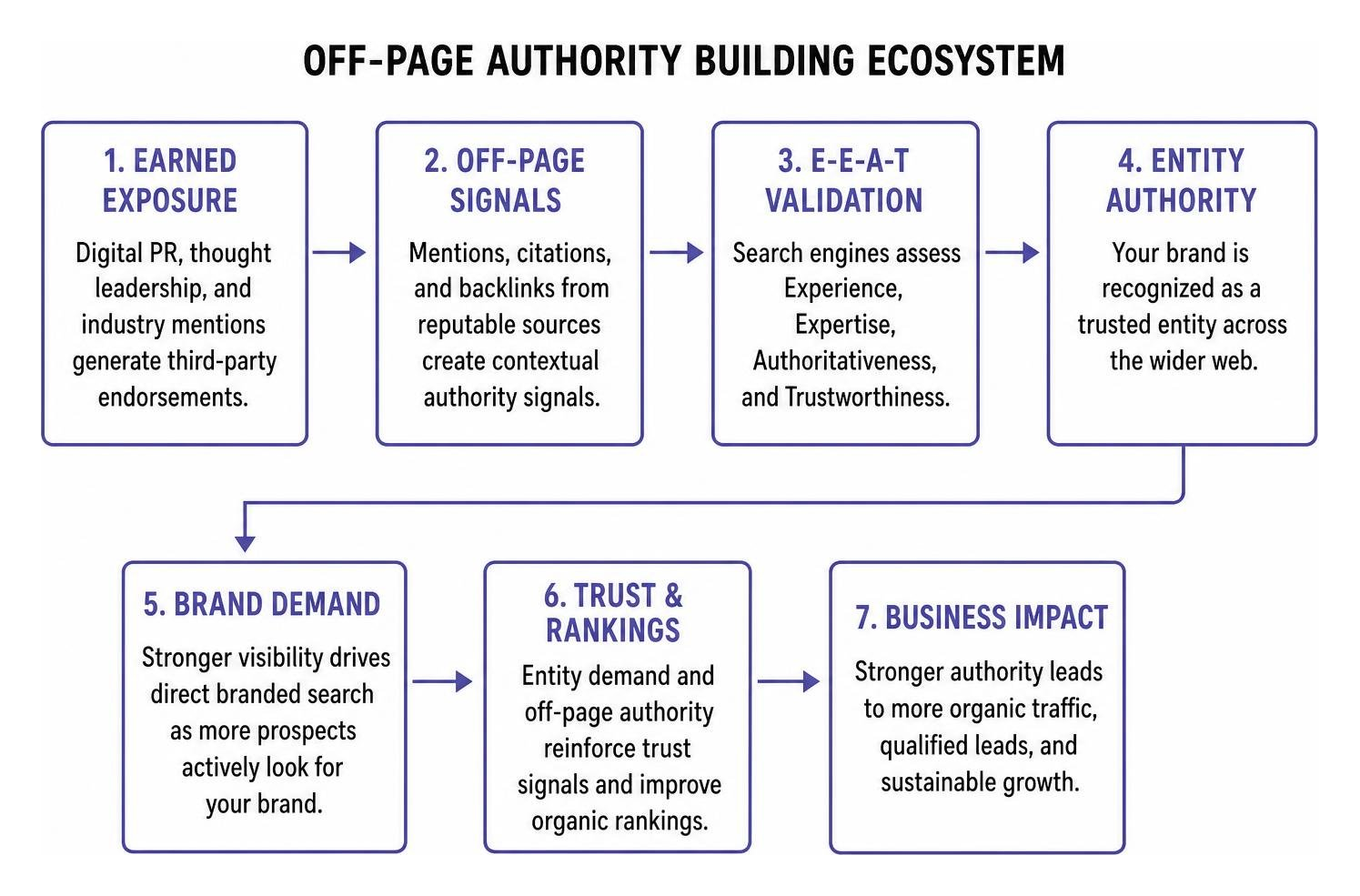
Search engines increasingly treat unlinked brand mentions as implied links. When reputable industry publications, forums, or news sites mention your client's brand name, search systems register that contextual footprint.
Furthermore, off-page visibility drives direct branded search volume. When prospective customers see your client featured across industry channels, they search for the brand by name. This entity demand sends a massive trust signal to search algorithms, reinforcing organic rankings across primary commercial queries.
For multi-location and regional businesses, off-page authority is heavily anchored in local ecosystem signals. Consistency across Name, Address, and Phone number (NAP) data on major directory profiles prevents algorithmic confusion.
Simultaneously, customer reviews across platforms like Google Business Profile and industry directories provide real-time sentiment signals. Managing these assets off-site directly determines who captures local 3-pack visibility and high-intent local organic traffic.
When pitching an off-page campaign, clients frequently ask why they cannot rely solely on content creation and technical website tweaks. While on-page optimization prepares a website to be understood, off-page optimization provides the credibility needed to compete for competitive terms.
| Factor | On-Page SEO | Off-Page SEO |
|---|---|---|
| Primary Focus | Content quality, metadata, site architecture, and code | Backlinks, digital PR, entity trust, and brand footprint |
| Control Level | 100% direct control on client-owned assets | Indirect influence via third-party publishers and platforms |
| Core Deliverables | Keyword mapping, technical fixes, schema, internal links | Editorial outreach, linkable assets, digital PR, citations |
| Primary Metric | Crawl health, page speed, on-page keyword relevance | Referring domains, domain trust, unlinked mentions, PR hits |
| Role in Funnel | Retains visitors, guides search bots, converts traffic | Builds authority to rank on Page 1 against strong competitors |
Off-page authority is completely wasted if a client's technical foundation is broken. If a target landing page has slow load times, poor mobile responsiveness, or broken internal links, the acquired link equity cannot distribute effectively across the domain. In your pitch, make it clear that off-page campaigns require a healthy on-site baseline to turn external authority into organic revenue.
Proposals six pages or less have a 66% higher acceptance rate compared to bloated decks. Buyers do not want a 40-page technical manual; they want a clear decision-making tool that addresses risk and demonstrates strategic thinking.
To maintain momentum, structure your pitch using proven frameworks like The No-Fluff SEO Proposal Playbook for Winning Better Clients. A winning document follows this sequence:
If you are building out your agency's standard templates, reviewing Beyond the Blank Page: Essential SEO Proposal Templates & Formats will help streamline formatting.
Proposals that include specific, customized audit insights close at dramatically higher rates than generic service outlines. You can deploy our Stop Guessing and Start Closing with Our SEO Audit Proposal Template to quickly pull referring domain deficits, toxicity screenings, and backlink gaps against the client's top three organic competitors. Showing a prospect that Page 1 competitors have an average of 45 high-authority referring domains while they only have 8 makes the commercial need for link building obvious.
Structure ongoing retainers around deliverable-based units rather than hourly rates. When agencies price by the hour, clients scrutinize timesheets instead of campaign value. Use a three-tier pricing model:
For larger accounts, refer to Big Sites, Bigger Buy-In: The Enterprise SEO Proposal Guide to navigate enterprise procurement standards and multi-stakeholder approvals.
Modern link building succeeds by offering genuine value to publishers and editors. Avoid mentioning outdated, risky tactics like directory blasting, automated comment links, or low-quality guest post farms.

Digital PR is the gold standard for earning Tier-1 editorial links. By analyzing industry data, publishing proprietary survey results, or providing expert commentary through direct journalist outreach and editorial source requests, you earn contextual backlinks on top-tier news publications that competitors cannot easily duplicate.
Pitching executive thought leadership - such as guesting on industry podcasts, participating in expert roundup interviews, or co-hosting niche webinars - generates authoritative contextual links and drives referral traffic while building branded search demand.
Identify broken links on reputable resource hubs within your client's industry and offer relevant, updated content assets from your client's site as direct replacements. This provides immediate value to webmasters by fixing broken user experiences while earning high-intent contextual links.
Small errors in your pitch document can raise red flags that stall deals in committee review. If you need structural examples that avoid these pitfalls, inspect an Unlock Deals with a Killer SEO Proposal Sample to ensure your pitch addresses risk and highlights transparent deliverables.
Avoid tactics that conflict with Google Search spam policies, including paid links intended to manipulate rankings, excessive link exchanges, or scaled low-quality guest posting.
Guaranteeing specific keyword positions is the fastest way to lose credibility with sophisticated buyers. Page 1 of Google captures roughly 75% of clicks, while Page 3 captures under 1%, making rankings high-stakes. However, algorithmic updates, competitor actions, and crawl schedules remain outside direct agency control. Commit to deliverable quality, outreach velocity, and indexation metrics instead.
Teams with a consistent proposal process outperform teams that wing it. Furthermore, structured multi-touch follow-up roughly doubles the close rate versus sending a document once and waiting passively.
Execute a 4-touch sequence across 14 days:
Clients need to see how external authority building impacts their business. Provide monthly reporting dashboards that cleanly separate leading indicators from lagging commercial returns.

An off-page proposal should include an executive summary, competitor backlink gap analysis, target link vetting criteria, a 90-day execution roadmap, countable monthly deliverables, transparent pricing tiers, and client sign-off terms.
Position your service around earned media, digital PR, and content amplification. Explicitly define your domain quality criteria (e.g., minimum traffic thresholds, topical relevance, editorial standards) and establish a clear client approval workflow for outreach targets.
Off-page services are most effectively packaged as monthly retainers with countable monthly deliverables or tiered packages based on link acquisition volume and content asset production. You can review our Download Your Way to SEO Wins: The Ultimate Free Proposal Template Collection for packaging ideas.
Closing off-page SEO retainers requires pitching clean, white-hat methodologies that protect client trust while demonstrating clear commercial impact. By eliminating vague promises, incorporating data-backed pre-proposal audits, and packaging countable deliverables into tiered roadmaps, your agency can systematically win higher-value retainers.
To eliminate the manual labor of prospecting, outreach, and pitch generation, many agencies leverage automated SEO services. Using Adaptify's AI-driven platform, agencies streamline everything from digital PR outreach to comprehensive search strategy formulation—allowing you to scale authority building and deliver consistent client results without inflating operational overhead.

Stop being invisible: discover what the best local SEO strategies for small businesses are to dominate Google Maps, reviews, and AI search...
Master localized SEO to rank your local business in Google Maps and drive more in-store visits.
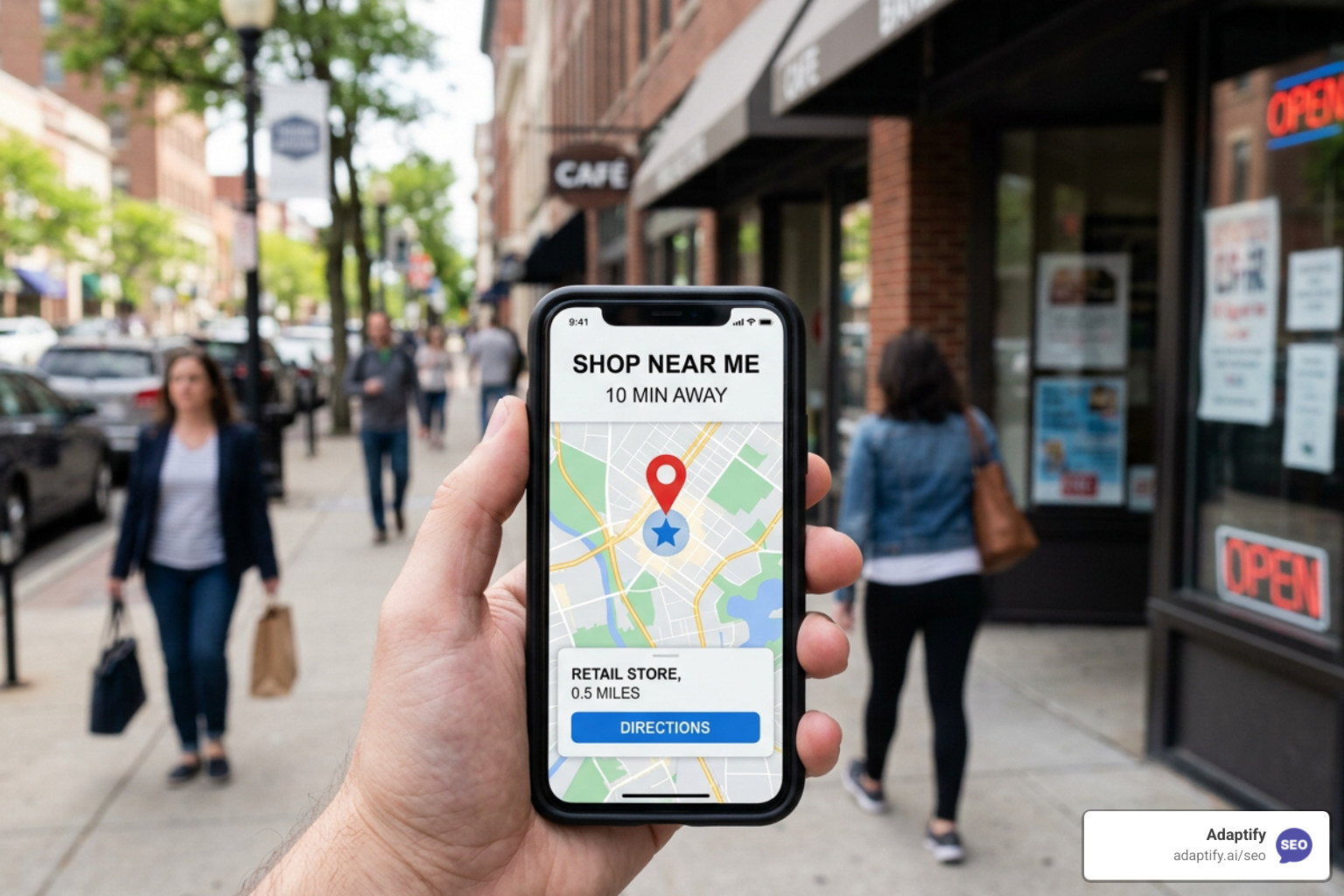
Master local retail SEO to drive foot traffic from Google with proven strategies for GBP, reviews, and AI search optimization.
Join 1,000+ agencies already delivering SEO and AI visibility from a single platform without increasing their headcount.Join 1,000+ agencies already delivering SEO and AI visibility from a single platform without increasing their headcount.