How to buy GEO packages without getting ghosted by AI




AI-driven visibility services in GEO AEO are the new baseline for B2B brands that want to be found — not just on Google, but inside the AI-generated answers that buyers now read first.
Here is a quick snapshot of what these services cover and what to look for:
| Service Type | What It Does | Why It Matters |
|---|---|---|
| SEO | Ranks pages in traditional search results | Still foundational; AI engines use it as a trust signal |
| AEO (Answer Engine Optimization) | Gets your brand surfaced in AI answer features like Google AI Overviews | Buyers get direct answers without clicking through |
| GEO (Generative Engine Optimization) | Gets your brand cited inside ChatGPT, Claude, Gemini, Perplexity | Where B2B research increasingly starts in 2026 |
The search landscape shifted fast. AI Overviews now reduce click-through rates for top-ranking content by 58%. ChatGPT processes 2.5 billion prompts daily, and 65% of those qualify as search behavior. At the same time, visitors who arrive from AI platforms convert 4.4 times better than visitors from traditional search. That combination — less traffic, higher intent — changes what good visibility actually means.
For B2B buyers, this matters even more. Enterprise purchases involve multiple stakeholders and long research cycles. Buyers are already asking ChatGPT and Gemini to compare vendors, summarize categories, and recommend tools — often before they ever visit a website. If your brand is not showing up in those answers, you are invisible at the most critical point in the buying journey.
The problem is that the market for GEO and AEO services is moving just as fast as the technology. Every agency has added "AEO" to their services page. As one industry observer put it bluntly: adding a line item and actually knowing how to get brands cited in AI platforms are two very different things.
This guide is for agency owners and B2B marketers who want to evaluate these services seriously — and avoid wasting budget on providers who cannot deliver.
I'm Hansjan Kamerling, product designer and marketing consultant at Adaptify AI, and I've spent years helping SaaS platforms and tech startups build scalable visibility strategies — experience that maps directly onto the challenge of AI-driven visibility services in GEO AEO as the search stack continues to evolve. Let's walk through exactly what to look for, what to measure, and which red flags to avoid.
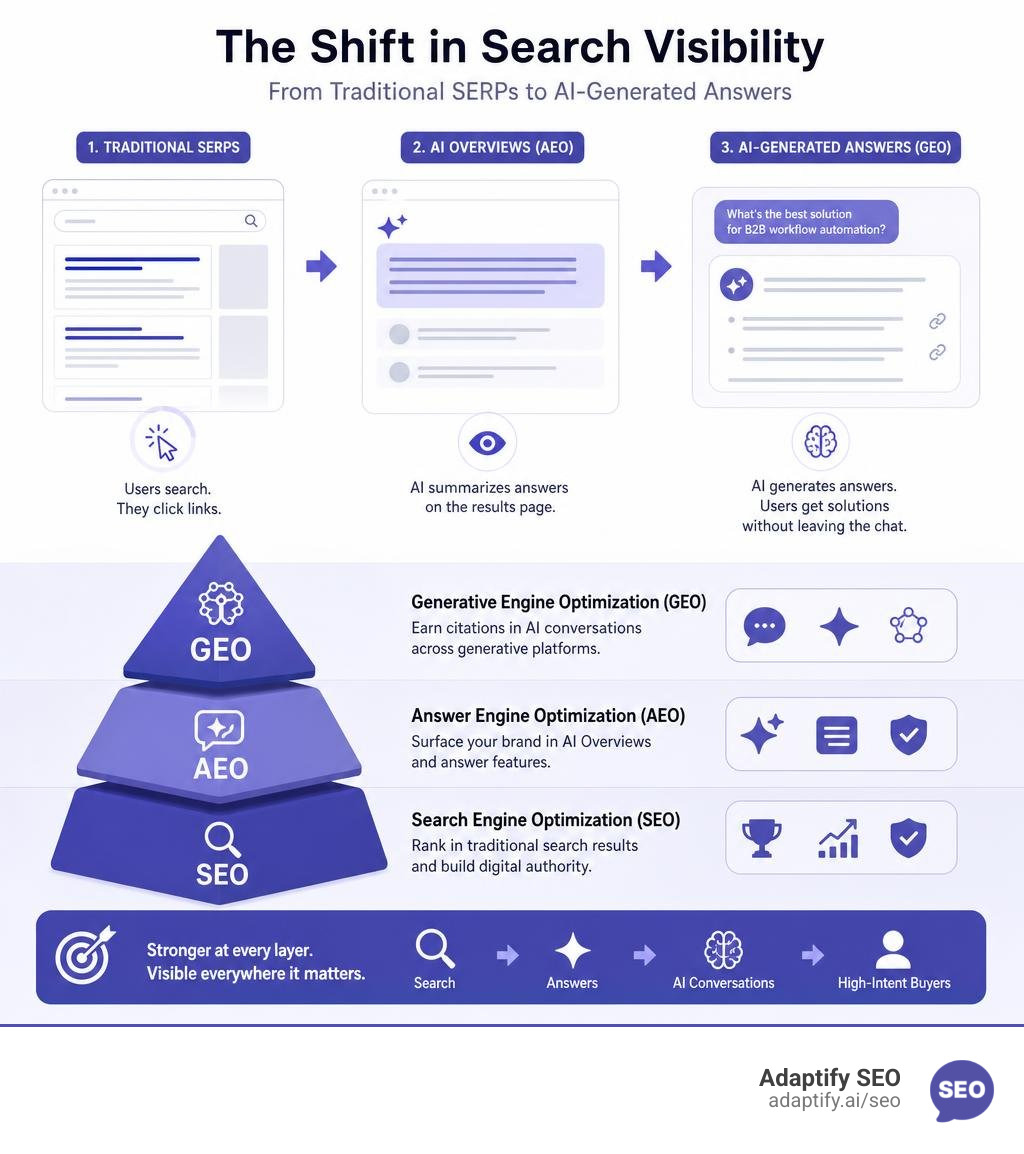

When I evaluate ai-driven visibility services in geo aeo, I look beyond the trendy buzzwords. The goal of these services is simple: to make sure your brand is the one recommended when a potential buyer asks an AI engine for a solution. But how do you separate the real practitioners from those who are just repackaging basic keyword optimization? You must understand the core stack first.
B2B brands cannot afford to treat these strategies as mutually exclusive. They are complementary layers of the same visibility engine.
| Optimization Layer | Target Surface | Core Mechanics | Primary Objective |
|---|---|---|---|
| Traditional SEO | Search Engine Results Pages (SERPs) | Keywords, backlinks, technical crawlability | Drive organic traffic and build domain authority |
| AEO | Direct answer features & voice assistants | Structured Q&As, conversational intent mapping | Answer direct user questions immediately |
| GEO | Large Language Models (LLMs) & RAG systems | Semantic entity building, verifiable source citations | Secure citations and brand recommendations |
Traditional SEO remains the foundation. AI models rely on search engines via Retrieval-Augmented Generation (RAG) to fetch real-time data. If your site lacks domain authority or fails basic search intent matching, AI crawlers will not trust your content enough to cite it.
To dive deeper into how these elements work together, you can read our Beginner's Guide to Geo AI SEO.
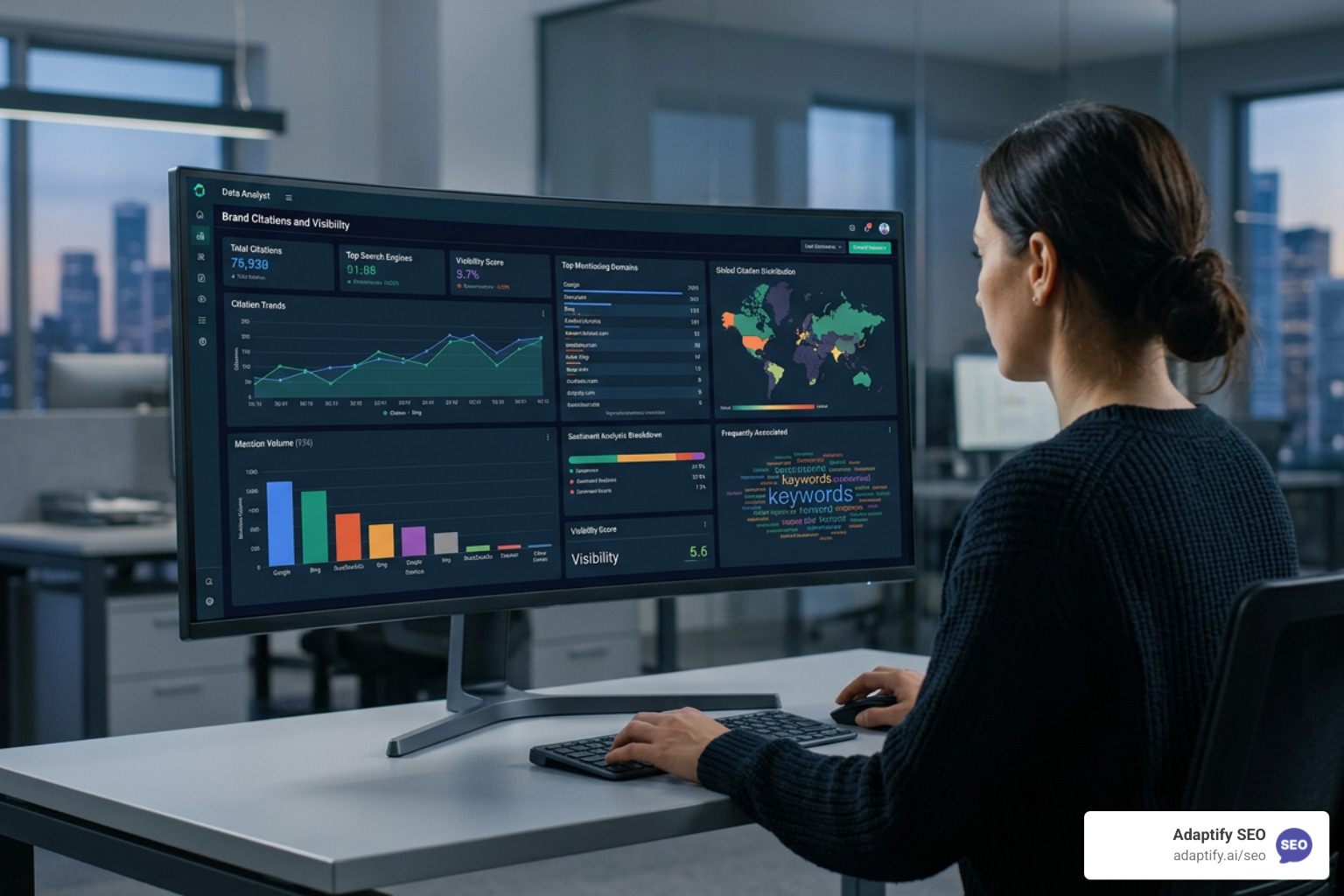
If you are shopping for a GEO package, a high-performing service must offer more than static reports. It requires active, real-time tracking across multiple engines. I look for platforms that integrate with comprehensive intelligence tools like GeoNeo - AI Visibility Intelligence to run live API calls across major LLMs.
A professional service should track:
Furthermore, your provider must look beyond Western platforms. Tools that ignore Asian AI engines like DeepSeek and Qwen miss out on a massive market of over 1.4 billion users. For a complete breakdown of the top tools in this space, check out our analysis of The Best AI-Powered Geo SEO Platforms for 2026.
The traditional conversion funnel is broken. In the past, a buyer searched for a keyword, clicked your link, read your blog, and filled out a form. Today, they use ChatGPT, Gemini, Claude, or Perplexity to do the heavy lifting.
This creates a "zero-click" environment where 60% of searches end without a single click to a website. However, when a user does click a link suggested by an LLM, they are highly qualified. Data shows that LLM-referred traffic converts significantly better than traditional search traffic.
To make sure your business does not vanish in this new landscape, you need a strategy to address this shift. Learn How to Stop Being Invisible to ChatGPT and Gemini to keep your brand at the top of their recommendation algorithms.
To win in GEO, your website must be easily readable by both humans and machines. This requires a mix of technical hygiene and smart formatting:
/llms.txt file at your root directory to provide clean, structured context designed specifically for LLM parsers.Advanced spatial and structured data frameworks, such as those used by GeoTwin 4D | EarthSense or open-source projects like h9zdev/GeoSentinel , demonstrate how complex geospatial and semantic data can be mapped for machine comprehension. Understanding these models is key to navigating The New Frontier: Integrating AI and Geo for Business Growth.
For highly specialized applications, look at how platforms like BeyondEx — AI geospatial intelligence for high-stakes operations and AI-Powered Satellite Intelligence Across Industries structure complex data to make it instantly queryable by AI agents. Your B2B content needs that same level of structural clarity.
AI engines do not just scrape your website; they look at what the rest of the web says about you. To build the trust signals that LLMs rely on, you must secure mentions across high-authority third-party platforms:
Unlinked brand mentions on these platforms are highly valuable. AI models use them to map your brand's relationship to specific industry topics. If you want to dive deeper into how local and entity-based authority is shifting, read our article on why Local SEO is Dead, Long Live GEO: Boosting Local Visibility in AI.
If you are ready to invest in GEO and AEO packages, you need to know what a realistic roadmap looks like.
First, ignore any agency promising overnight results. A legitimate campaign follows this general timeline:
Second, watch out for black-hat tactics. Trying to "stuff" hidden keywords in white text to trick AI crawlers or spamming AI models with fake reviews will get your site flagged. Similarly, make sure your developer team does not accidentally block AI crawlers in your robots.txt file. If the bots cannot crawl your site, you will not get cited.
To learn more about setting up a sustainable campaign, explore our core services at https://adaptify.ai/seo.
When selecting an agency or platform, you need to ask the right questions. Avoid partners who only show you traditional keyword rankings. Instead, demand reports that focus on critical GEO KPIs:
At Adaptify.ai, we specialize in helping agencies streamline these complex processes. We automate the technical heavy lifting — from structured schema generation to high-authority PR link building — ensuring your clients remain highly visible in both traditional search and generative engines.
To find the right fit for your business, check out our guide on Who Offers the Best AI Visibility in the GEO Agency World.
Ready to secure your brand's place in the future of search? Visit our pricing page to find a plan that fits your agency's needs, or explore our complete automated SEO solutions to scale your visibility campaigns today.
Stop being invisible: discover what the best local SEO strategies for small businesses are to dominate Google Maps, reviews, and AI search...
Master localized SEO to rank your local business in Google Maps and drive more in-store visits.
Master local retail SEO to drive foot traffic from Google with proven strategies for GBP, reviews, and AI search optimization.
Join 1,000+ agencies already delivering SEO and AI visibility from a single platform without increasing their headcount.Join 1,000+ agencies already delivering SEO and AI visibility from a single platform without increasing their headcount.